15. Kahdet kaulukset

15. Kahdet kaulukset
Jenna Puntala / Kahdet kaulukset
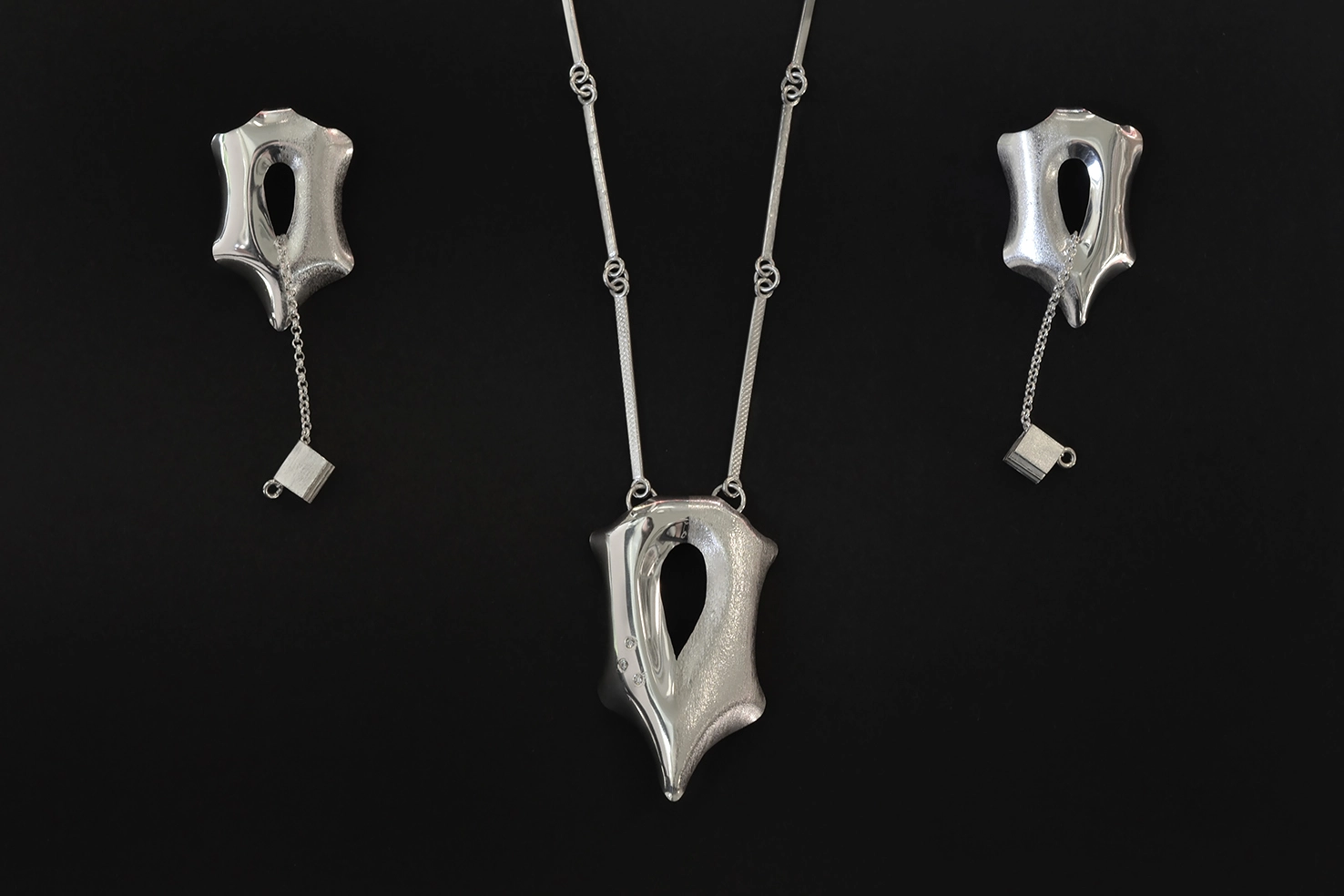
Necklace and earrings
Silver and CZ 1.75
This jewelry symbolizes inequality in the workforce and the pursuit of equality. The chain without a lock represents the fragility of balance in collaboration. The spinning books signify the ever-changing nature of knowledge, while the open and closed books highlight the unequal recognition of the education of highly educated immigrant women in Finland. These pieces are designed to empower those who must work harder to achieve the same recognition as others.
Kristiina Tiimus
I am originally from Estonia, near Tallinn. I fell in love with a Finnish man, and we decided to live in Finland. Soon after, we had a child.
Equality means providing opportunities for everyone. The general perception of immigrants is that they are lazy and just want social benefits.
I hadn’t thought much about this until I became an immigrant myself and realized that it’s not necessarily true—no more so than for certain groups of Finns themselves.
It's difficult for immigrants to find work, and if that doesn’t happen, I now fully understand how frustrating and hopeless it can feel. I have two university degrees, extensive experience in my field, and I speak Finnish fluently, yet I couldn’t even get interviews. I can only imagine how hard it is for those who come from further away and don’t speak the language.
Finland could benefit so much more by utilizing immigrants better. It would greatly contribute to Finland’s economy and general well-being!
Adapting to life in Finland has been easy for me, as I speak the language and my home country is nearby. Additionally, there aren’t many significant cultural differences between Estonia and Finland. Of course, I miss Estonian food, especially meat and dairy products, as well as the cafes in Tallinn. However, I enjoy how service is better in Finland, people are generally more polite, public transport works more efficiently, and it’s easier to cycle here.
One big difference is in bureaucracy. In Estonia, dealing with the government is much smoother. In Finland, you end up waiting and calling for a long time. A funny incident happened when they accidentally listed the wrong mother on my child’s official papers!
Things got difficult when I wanted to enter the workforce. There’s a strange situation in Finland where immigrants are expected to find work, but it’s really hard to get a job unless it’s a certain type—like cleaning or dishwashing.
I participated in Väestöliitto’s Womento mentoring program, which is for highly educated immigrant women. There, I was encouraged to apply for jobs a couple of steps below my qualifications. Once I accepted that, I succeeded quickly and now work for a large Finnish company.
Finland is my home now, but my heart will always remain in Estonia.