Loading...
14. Salmon fishing and other fishing
14. Salmon fishing and other fishing
00:00
00:00
Finland is called the land of thousands of lakes, and for a good reason.
Finland has a total of 168,000 lakes, all at least 500 square kilometers, in addition to which our country has rivers, ponds and a connection to the Baltic Sea.
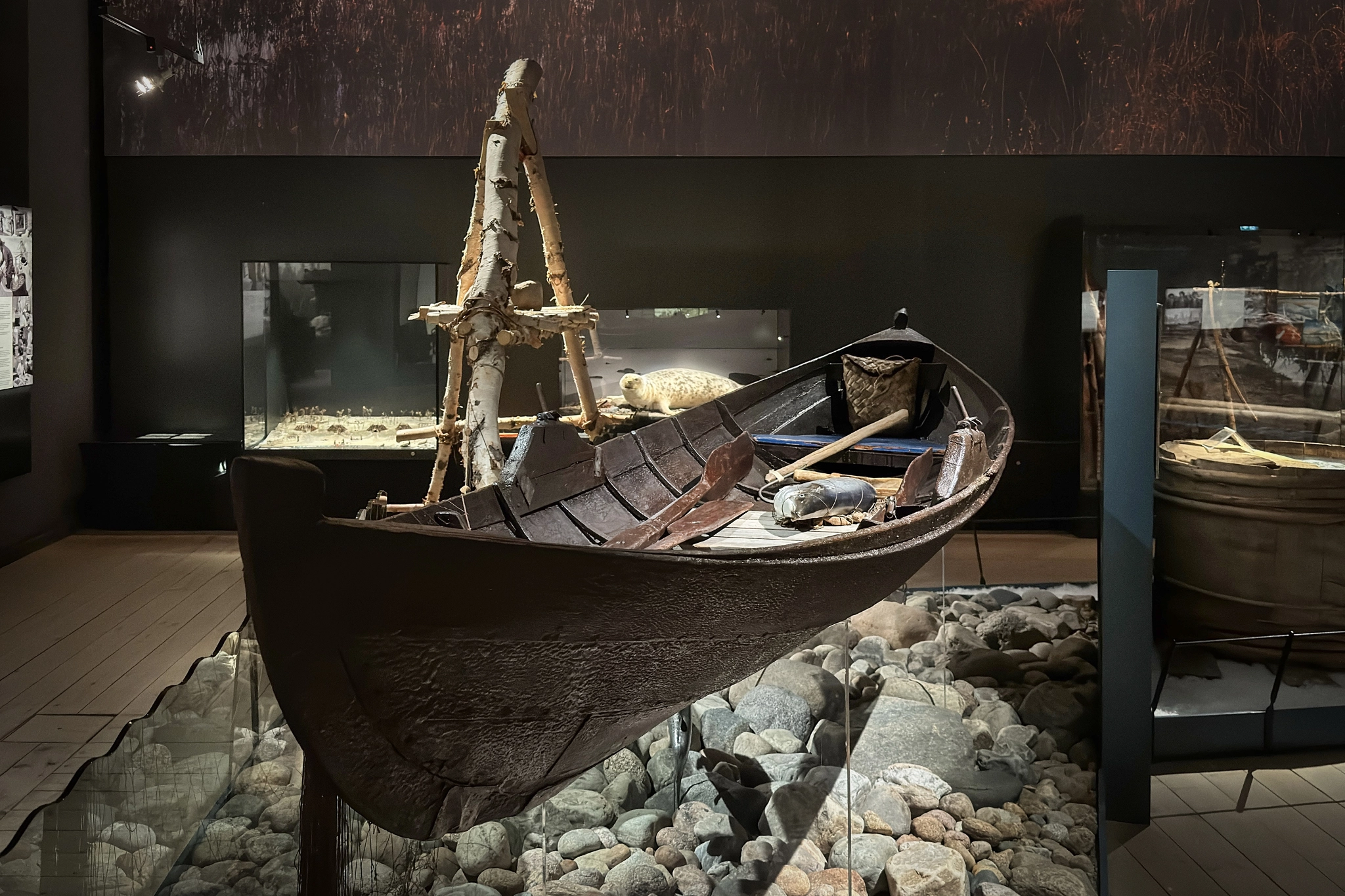
Fishing in Finland's fish-rich waters has fed our country's population for millennia. Almost everywhere in Finland, fishing was an important source of livelihood until the beginning of the 20th century. Pike caught from Lapland's lakes were dried and taken to the cities of the Baltic Sea area as early as the Middle Ages. On the shores of the lakes, there are still plenty of catch statues, catch signs, cellars and dwelling bases carved by fishermen from the past.
In Lapland, the main rivers have functioned as transport routes for both salmon and people. Before it was dammed, the Kemijoki, Finland's largest river, flowing through Rovaniemi, was teeming with salmon. There was enough salmon in fact to provide employment for fishermen, food for our own needs, and enough fish to export.
The salmon that came up from the sea in Kemijoki were huge, their length could be up to one and a half meters and they weighed tens of kilos. In the lower reaches of Kemijoki, there were salmon farmers, who caught rising salmon to spawn at fixed dam sites according to precise rules. 40,000 kilos of salmon were obtained from one salmon farm. Salmon were preserved by salting them for export in barrels weighing about 120 kilos. The fish was also considered suitable as a tax payment.
Salmon was a source of wealth, but it also caused controversy and conflicts of interest. Catches were badly affected by state restrictions and increased fishing. Unfortunately, the golden days of salmon fishing in Kemijoki ended in 1948, when the Isohaara power plant was completed near the Kemijoki estuary. The salmon could no longer go up the river, and with that came the end of the centuries-old tradition of salmon fishing and the salmon farming lifestyle.
Fishing is still a favourite pastime of Finns who enjoy nature, and fishing equipment is more sophisticated than ever. Fishing provides good and nutritious local food. Tourists can also try fishing themselves as part of their trips to Lapland.
In Finland, fishing is part of our heritage. Here, fishing with line, ice fishing and so-called herring fishing belong to everyone's rights. For other ways of fishing, you must have a fishing permit.
Theme
