Loading...
17. The bear
17. The bear
00:00
00:00
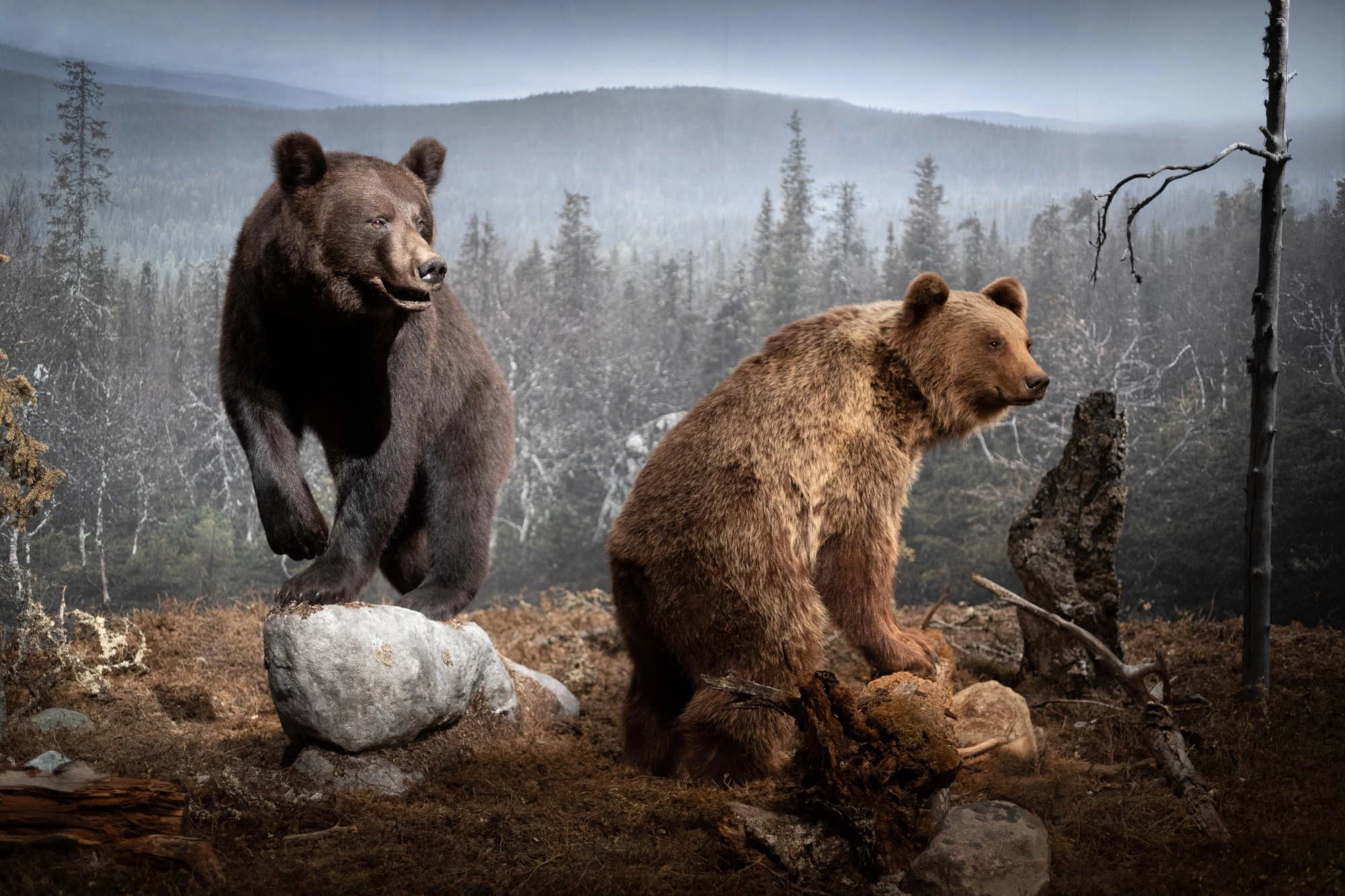
The bear is Finland's national animal. In the exhibition, you can see a mother bear and a cub about a couple of years old.
The brown bear is Europe's largest predator. The male can weigh up to 300 kg and the body can be over 2.5 m long. Despite its clumsy appearance, the bear can accelerate its running speed up to 60 kilometers per hour. However, it usually moves quietly with all senses alert and tries to avoid humans.
A bear can live for up to 30 years. It hibernates in and around October or November and sleeps in the nest for about half a year. During hibernation, the bear's vital functions slow down and its body temperature drops. In this way, energy consumption is reduced and the bear hibernates for up to seven months with backup food. The female bear gives birth to her cubs in the winter den, usually during the frosts of January. The number of cubs varies from one to four.
The bear is omnivorous, but mainly eats plant products, such as berries. It likes to eat honey from beehives, but insects, larvae and antsarealso make good eating. After waking up from hibernation, the bear can hunt moose, but it also lives on scavengers.
The bear has had considerable mythological importance in the world of our ancestors. It was thought to be of divine origin. According to birth myths, it was either lowered from heaven to earth in a chariot or born in Tapiola; in the forest. According to one myth, it was born from wool that drifted along with the North Sea current.
The bear is feared and respected. This beast was to be avoided, and the pronunciation of its name was believed to summon it. In Finnish, there are many names for the bear, the king of the forest. In past times, a great feast was organised in honour of the slain bear. The purpose was to appease the bear and convince it that the hunters were not to blame for its death. Finally, the bear's skull was placed on the top of the high coniferous tree and thus the bear's insides were returned to heaven, up to the shoulder of The Big Dipper.

Theme
