Loading...
19. Winter hut, reindeer husbandry and nomadic lifestyle
19. Winter hut, reindeer husbandry and nomadic lifestyle
00:00
00:00
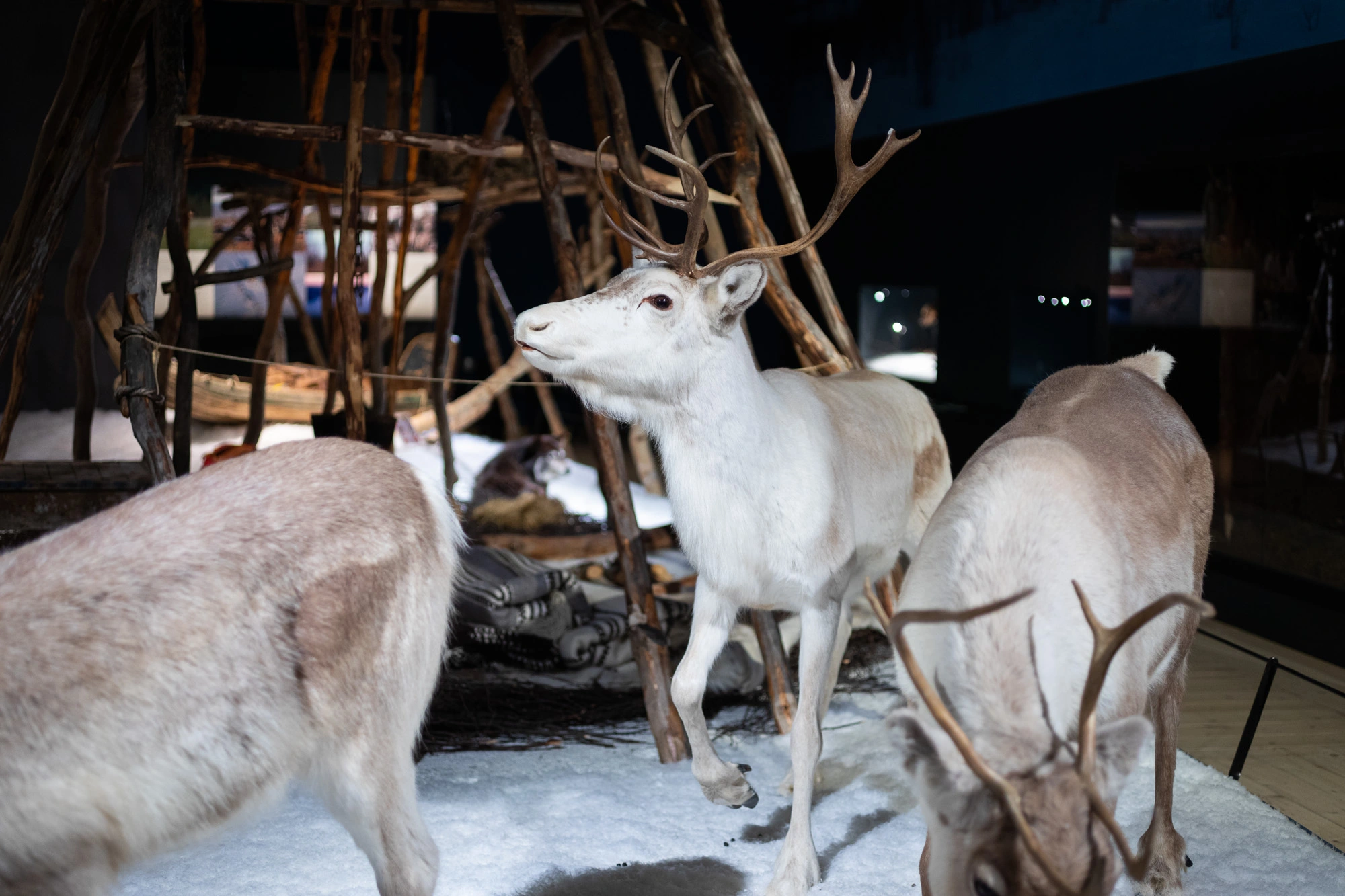
In front of you, you can see the last winter hut in use in Finnish Lapland, where people still lived between 1947 and 1960.
Traditional Sámi nomadism included long migrations from inland winter pastures to coastal summer pastures. The Sámi traveled those long journeys together with their reindeer and settled down to live with them in seasonal pastures. The winter hut traveled with the people and was erected in the reindeer's winter pasture area, or the winter village.
The history of reindeer husbandry stretches back many centuries. Hunters caught reindeer and tamed them as bait to catch larger prey. Reindeer herding practiced by the Sámi is considered to have started in Northern Norway and Finland in the Middle Ages. In the 17th century, almost all Sámi who paid taxes owned reindeer. Border closures, first between Finland and Norway in the middle of the 19th century and about 50 years later between Finland and Sweden, prevented traditional migrating and reindeer husbandry changed its form.
Reindeer husbandry is still practiced. In the Nordic countries, it is mainly done by the Sámi people, and Finland is the only Nordic country where Finns can also practice reindeer husbandry. Although reindeer herding is a traditional way of life for the Sámi people, not all of them are reindeer herders. Many Sámi are also fishermen and hunters. However, reindeer husbandry has had a profound effect on the life of the Sámi people as a whole: reindeer have provided both food and material for clothes, jewelry and household items.
Nowadays, reindeer move relatively freely for most of the year in the territory of each herding unit. Reindeer care follows the cycle of the year and the natural rhythm of the reindeer's life. Reindeers are not wild animals, each of them is owned by someone. Owners recognize their own reindeer by the mark made on their ear, made with a knife on each fawn in the spring, when they move around in the company of their mothers. The reindeer mark register is maintained by the reindeer grazing association.
Reindeer are under the supervision of the caretakers only a few times a year: during calving in the spring, during the tagging of the reindeer in the summer, and for slaughtering and counting reindeer numbers in the winter. Nowadays, snowmobiles are used to help reindeer care, and the reindeer are also fed regularly.
Let's go back inside the hut and the atmosphere of nomadic life for a moment. There is a campfire in the middle of the house providing warmth and light. There is a place in the back for food preparation and storage. There is also a doorway behind it, which men used when they went to the forest and from which the dead were carried out. Inside there was a strict order due to the narrowness of the house; the men's side was on the left, the women's on the right. The mobile way of life limited the number of objects that could be transported, and therefore the objects were small, durable and suitable for purpose. Inside the home, there is a child's cradle made of reindeer skin.
The hut is now on display without the outermost, weather-protecting and heat-insulating hut clothing, sewn from wool fabric shingles and blankets. Next to the hut is a warehouse built of birch trunks, where lichen scraps collected for reindeer food were stored.
The sledge displayed in front of it was manufactured in 1948. Sledges of that type, pulled by reindeer, were used to transport both people and goods. A reindeer hound was used to herd the reindeer. Reindeer were usually caught with a lasso, especially when it was time for ear marking.

Theme
