Loading...
10. Polar bear

10. Polar bear
00:00
00:00
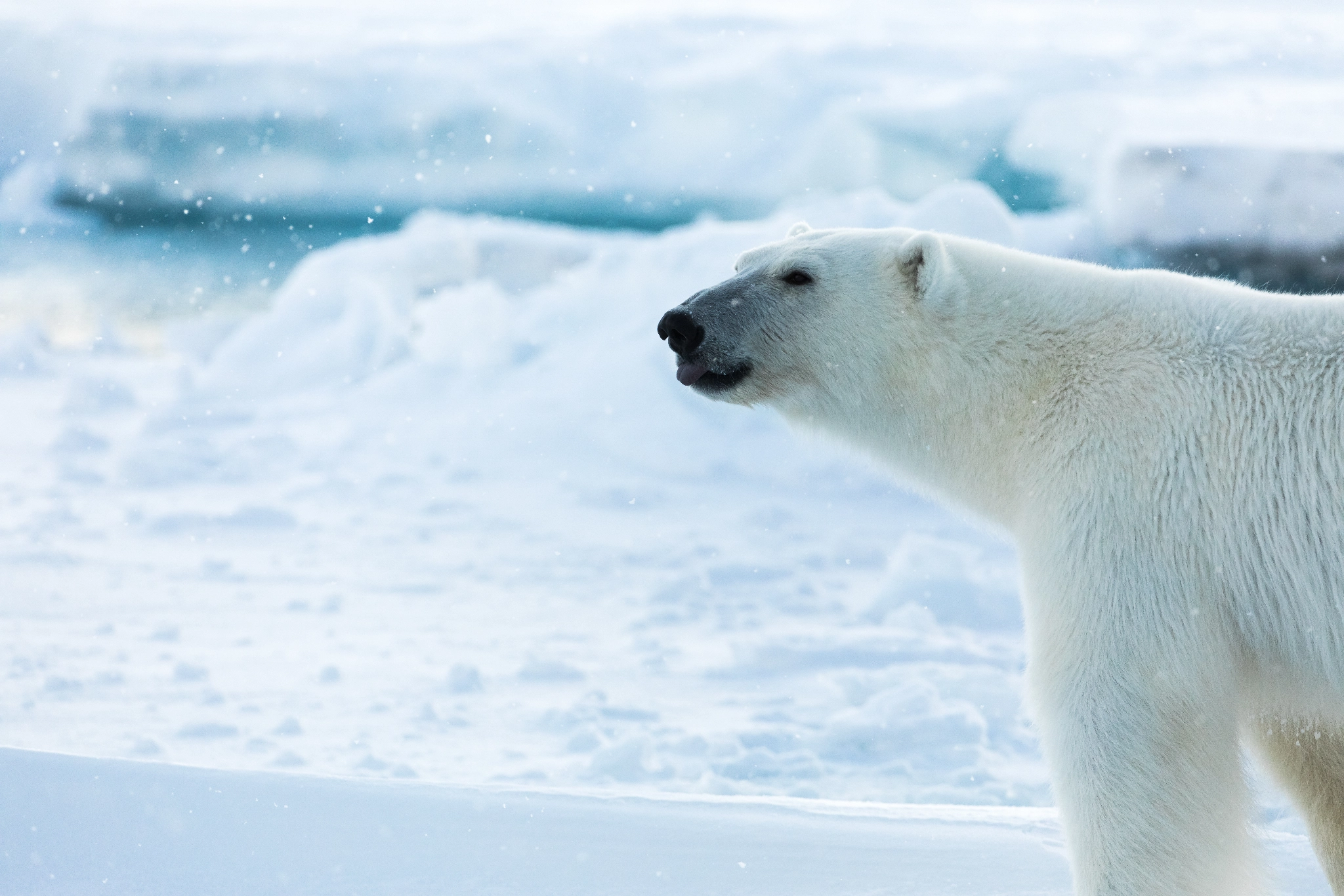
A great white beast, a polar bear, moves on frozen sea ice. The bear's fur has acquired a slightly yellowish colour, which is due to the seal blubber it eats. Walking slowly, with the help of its precise senses, it seeks out a ringed seal for its prey. A polar bear can spot a seal from kilometers away and smell it from 800 meters away.
The world's largest bear, the polar bear, is a fascinating example of how arctic animals have adapted to their northern habitat.
Polar bears experience temperatures that, with icy winds, drop below -50 degrees Celsius. In severe cold, polar bears survive with the help of their thick fur. This fur has two layers: an insulating undercoat, and long protective hairs on top. Each transparent hair has a hollow, split core for added thermal insulation and buoyancy. The blubber layer under the skin, up to 12 centimeters thick, acts as an energy store and insulator.
The animal's white colour makes it blend in with its surroundings and is caused by a lack of pigments. Polar bears look whitest when they are clean and in sunlight, especially just after the moult period in late summer. Surprisingly, under all that fur, the polar bear's skin is black.
The polar bear, which lives throughout the northern polar region, is a wanderer of the sea’s ice fields. It spends most of its life walking on icy surfaces, and partly moving in water. A female can travel more than 5,000 kilometers a year, and in one day she can walk up to 20 kilometers. Only pregnant females retreat to the snowy den for a longer period of hibernation.
Polar bears are good swimmers and skilled at moving around in their environment. On thin ice, they can slide, pulling themselves forward with their paws. When the ice is particularly weak, they spread out in a starfish position to distribute their weight evenly.
There are an estimated 22,000 to 31,000 polar bears in the world. It is an endangered animal that has become a symbol of climate change due to the reduction of sea ice. The polar bear needs sea ice that is thick enough to support it, but is still thin enough for the seals to have breathing holes. The sea ice also has to have sufficient coverage for uniform routes, as moving in areas with little ice cover consumes a lot of energy.
A polar bear can live to be 25-30 years old. This stuffed female polar bear you are looking at died in 1976 in a zoo.

Theme
