Loading...
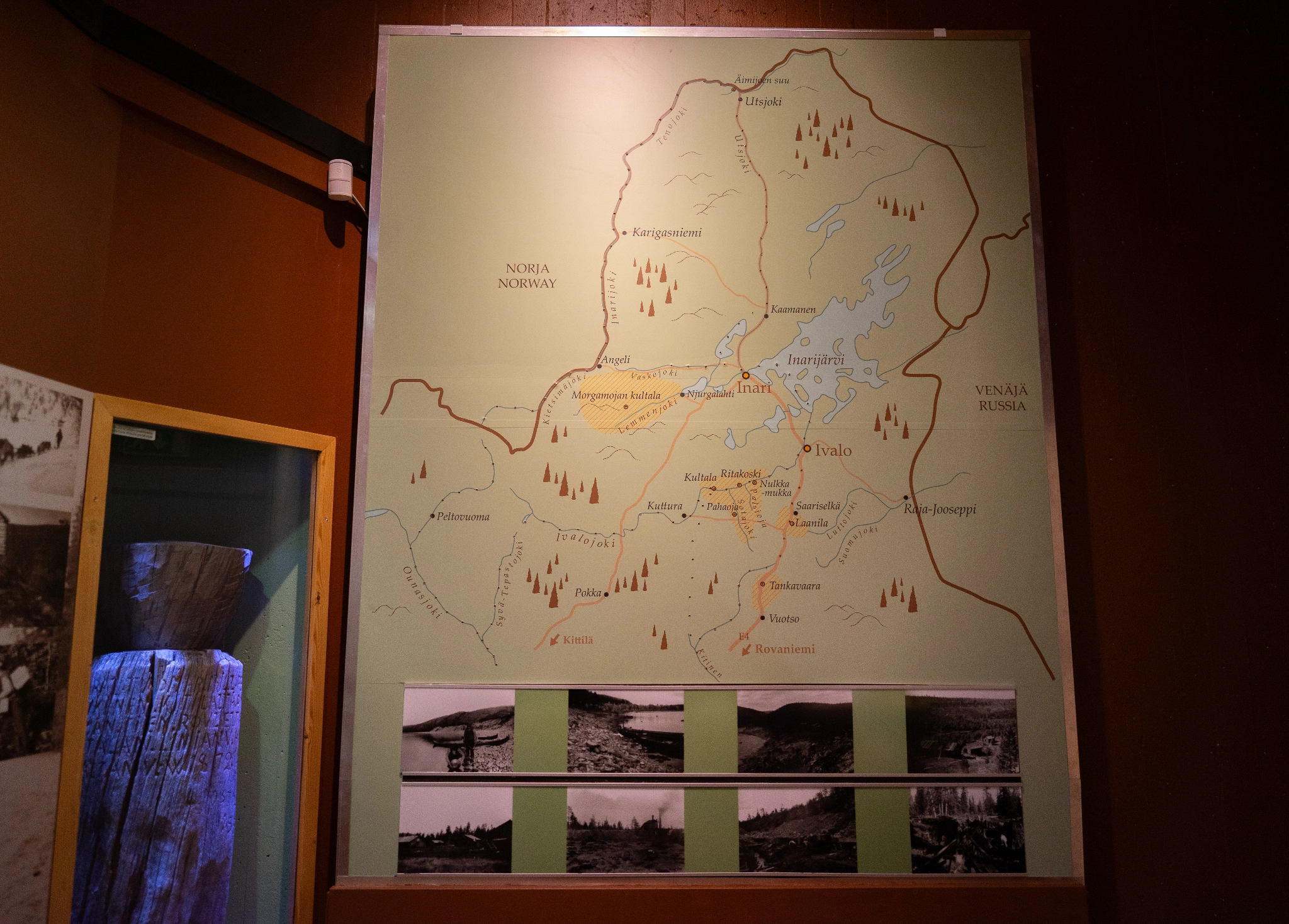
2. Auriferous regions in Lapland

2. Auriferous regions in Lapland
Auriferous regions in Lapland
Placer gold deposits of Lapland appear within a large granulite belt, which stretches from Utsjoki in a wide arch over Inarin-Lappi all the way to Russia. Gold prospectors have been interested in a number of rivers in Lapland, such as Tenojoki, Äimijoki and Tuntsa.
Ivalojoki: The discovery of gold in Nulkkamukka in 1868 by J.C.Lihr and his team started the first gold rush in Finland. The rush reached its climax in 1880s. During the following decade also tributaries of Ivalojoki, such as Sotajoki and Palsinoja, were claimed.
Laanila: Mining companies focused in this area during the first decades of last century while searching for the mother lode of gold.
Tankavaara: The southernmost gold region in Lapland. The first discovery was made by local Aleksanteri ”Sauva-Aslak” Peltovuoma in 1934 along Lauttaoja creek.
Lemmenjoki: Here, unlike other areas, gold also appears in open high country between rivers. The Ranttila brothers discovered the gold of Morgamoja in autumn of 1945. This is regarded as the start of Lemmenjoki gold rush.
Means of transport in the gold fields
Both land, water and air have been used to access the gold fields of Lemmenjoki. In addition to walking, traditional means of transportation were boat, horse and reindeer, but also some ingenious vehicles were used. Network of rivers, paths and roads formed the framework of communication.
Rowing boats were handy to use in the summer. Frozen lakes and rivers were useful in the winter. Boats and planes hauled the cargo as far as they could. The last stretch to the final destination was made by foot. Nothing could beat the skis when there was plenty of snow.
Horses were common but also reindeer and sled were useful when transporting prospectors and their cargo. Transition to cars, lorries and buses followed the development of roads. The nearest airport was in Ivalo which offered access to southern parts of Finland. On the top of Jäkäläpää and Martiniiskonpalo, in the heart of Lemmenjoki gold fields, are two air strips for small planes.
GOLD PANNING
Gold is among the heaviest metals found in nature. Gold is seven times heavier than the surrounding gravel and 19 times heavier than water. Due to this difference of weights man has been able to find alluvial gold for thousands of years.
THE SLUICE BOX
One on the most common methods of extracting gold from gravel is the use of sluice box and running water. The pay dirt is shovelled into a wooden flume of running water. Gold is trapped in the riffles attached to the bottom of the sluice while all lightweight material is carried away by the running water.
THE RIFFLES
In ancient times rocks, twigs or animal skins were used as riffles. Later these materials have been replaced by wood, metal or even rubber.
THE PAN
The most important tool for a gold prospector is the pan. It is used to separate gold from the concentrate of other heavy minerals and materials. In a rich deposit pan can be used without sluicing or any other pre-processing method. On the other hand, pan is an essential tool in machine operated panning sites, too. The models and materials of pans have developed in the course of time from pumpkin rinds to wood, metal and plastics.
THE GOLD CLAIM
Gold panning requires a license. Licensing is governed by the current mining law.

Theme
