Loading...
3. Daily routines of gold prospectors

3. Daily routines of gold prospectors
Daily routines of gold prospectors
Gold fields are often located in remote areas far from roads. Daily routines of living in the wilderness are not quite simple. Resourcefulness and the ability to adapt to the harsh circumstances will, however, help to manage the situation.
THE CABIN
In Lapland the first dwelling of a prospector usually was a tent or a lean-to. If the site proved to be worth digging, next step would be to build a peat hut or a log cabin. Tent sauna where men could wash up themselves was a must.
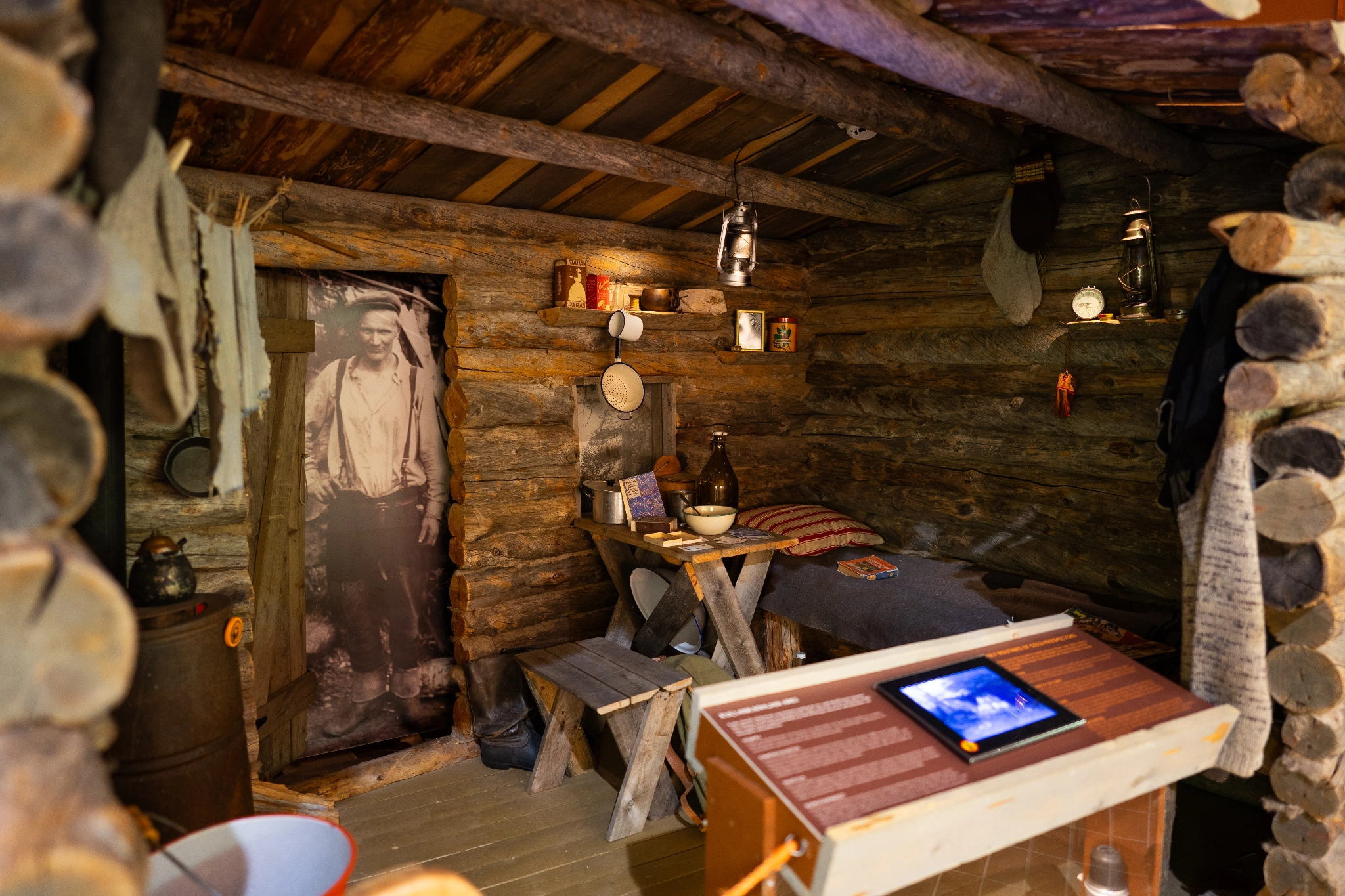
INTERIOR OF THE CABIN
The cabins were often heated by an iron stove. Early pioneers would have an open fireplace laid of stone. Both types of stoves were also used for cooking. The furniture was usually minimal due the small size of the cabin. A bunk, a table by the window and a stump of log for seat filled the basic needs.
CLOTHING
While prospectors lived on their working site, clothing primarily served working. In the course of years, the material of clothes and footwear has changed but it still serves the purpose of working and living in the wilderness. Anyone working in the gold fields had to be prepared for the invasion of mosquitoes and an occasional snowstorm in the summer.
FOOD SUPPLIES
Lightweight and well keeping provisions were valuable in the wilderness far away from roads. Nearby creeks often supplied fresh fish to complement the diet of canned food. Berries and mushrooms were within easy reach in summer and autumn. A number of prospectors also tended a small garden patch near the cabin for additional fresh food.

Theme
