Loading...
14. Switzerland, Czech Republic, Slovakia, Italy, The Romans, Germany

14. Switzerland, Czech Republic, Slovakia, Italy, The Romans, Germany
Switzerland
The Romans were the first people to search for gold in Switzerland. The earliest written document dates from the 11th century and describes how the monks were paying taxes to the Pope in form of gold dust.
In recent years, gold has been discovered in the Disentis area during the construction of a road. Today amateur prospectors pan for gold in the alluvial deposits of the Napf area.
Czech Republic and Slovakia
Three times in the course of history, gold has played an important role in the economic rise and cultural development of the former Czechoslovakia. The first took place in the Bronze Age, the next in the early Roman Iron Age and the final during the Middle Ages - especially in the 13th and 14th centuries. In Bohemia, gold came from the auriferous gravel of the rivers in the areas of Otava, Vltava and Berounia and has had a great influence on the province’s social and cultural development.
Gold mining continued areas of in modern day Czech Republic and Slovakia for several centuries, but the major undertakings ceased in 1968 and only Krasna Hora now produces small quantities of gold. Prospecting was done in big gold washing sites, of which the one-metre-wide sluice from 15th century is a remain.
Italy
Although gold is found everywhere in the Italian mountains, quantities of economic significance are in short supply. The last mines were closed in the 1960s and according to official sources no gold is produced in Italy. However, recreational gold panning has become more popular, and the law allows everyone to pan gold from a river in so-called ”everyman’s areas”.
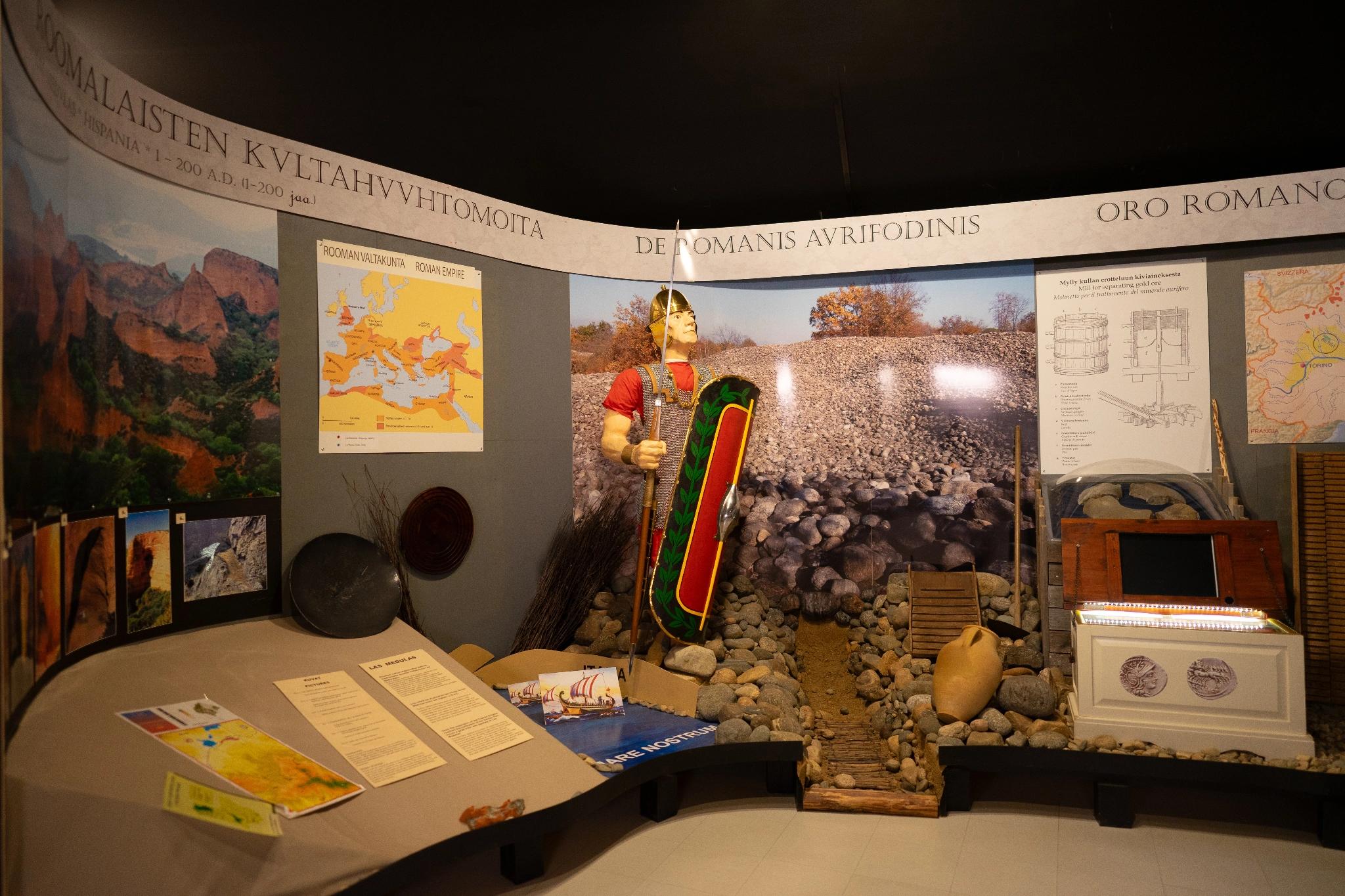
The Romans
The search for gold was one of the reasons for the Romans to undertake their conquest of Europe. They used the local people as slaves in the recovery of gold. One of the Romans’ biggest undertakings took place at La Bessa in the present-day Italy. 20 000 slaves worked there producing a 7 km long and 3 km area of washed stones that can still be seen there today.
In La Bessa, the prospecting method was as follows: long channels were cut into the ground and stones and twigs were used as riffles in them. The river water was diverted into the channels and the auriferous gravel was shovelled into the flow. The gold was caught in the twigs which were then burned so that the gold could be panned out of the ashes.
The Romans were, of course, also active at other mining locations in France, Spain, and Britain and throughout the Alps.
Germany
The Romans searched for gold also in Germany. In the 13th century the Rhein was the richest river in Europe. The poorer people of the Rhein, particularly women and elderly men, panned for gold, so this work was not actually appreciated.
The tools they used remained unchanged for hundreds of years and the broad sluices box survived as the most important piece of equipment up until the end of the 19th century. In good places and efficient panner could recover 4 grams of gold in one day... but no one ever became rich in this way.

Theme
