Loading...
15. France, Great Britain, Ireland, Hungary

15. France, Great Britain, Ireland, Hungary
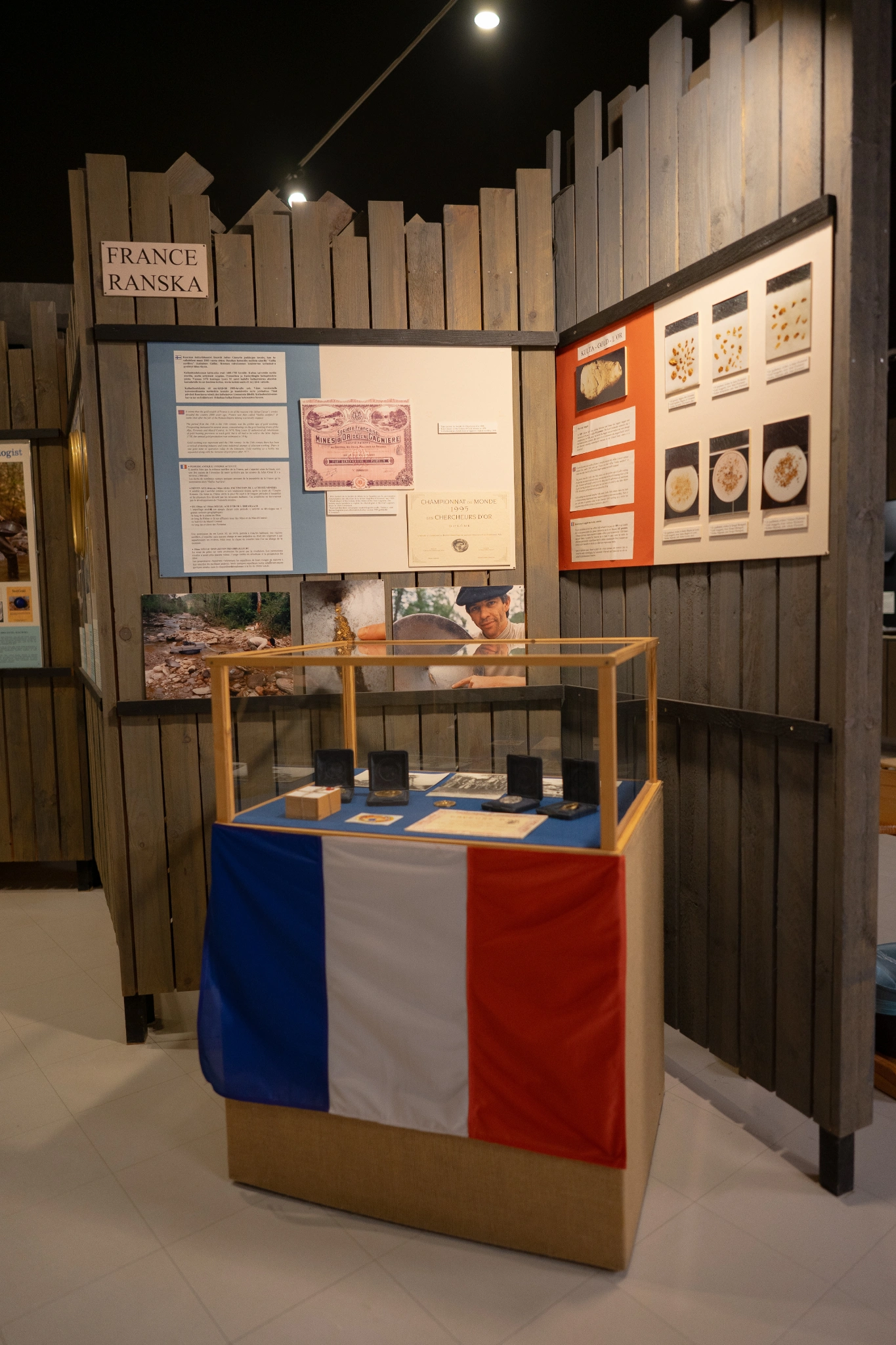
France
The French gold was one of the reasons why the troops of Julius Caesar invaded the region some 2000 years ago. At that time France was called ”Gallia Aurifera”, Golden Gallia. After the collapse of the Roman Empire, gold prospecting became almost inexistant.
The new peak of prospecting was reached between the 15th and 18th century and gold mining continued as a significant industry until the 19th century. The biggest areas of prospecting were Alpish rivers, the Pyrenees mountains and the Massif Central.
In 1476, the king Louis XI gave the habitants of gold-rich areas the right to prospect gold freely, on the condition that all gold found would be sold to the State. The yearly production was about 50 kg until 1750.
Gold prospecting continued in France the 19th century and the 20th century without huge changes. The rise of industrial prospecting made gold prospecting more interesting. The rising gold price in 1975 started a new interest in the gold prospecting.
Great Britain
In 43 A.D., the Romans who invaded Britain, mined for gold at Ogofau in South Wales and with the help of hundreds of slaves, recovered up to 900 kg of it. The mines were reopened in the 19th century, but finally closed with the outbreak of World War II. Nowadays there are no active gold mines in Wales.
The gold deposits of Crawfordmoor in southern Scotland are said ot have been the richest in Europe in the Middle Ages, which caused the name ”God’s Treasure House in Scotland”. Northern Scotland experienced its own gold rush when Robert Nelson Gilchrist discovered gold in Sutherland in 1868. However, the next year the Duke of Sutherland brought the gold mining activities to an end because his tenant farmers and fishermen complained about them.
Ireland
Gold is found in the north and in the south of Ireland and exploration of the different geological terrains is encouraged by the authorities. In the west, ancient rocks form the mountains of quartzite, and the trend is repeated in the east. Basalt lavas once flowed from the north-east and glacial deposits formed agricultural soil.
In the Wicklow Mountains, a piece of gold “the size of the head of a brass nail” was first discovered in 1765 at Ballinvally. When peasants found a 684 g nugget in 1795, it was purchased for presentation to King George III. After the find, hundreds of people went to look for gold, causing disturbances in the opinion of the officials. So, after an intervention by the Kildare Militia, in the 19th century, commercial companies operated with success in the Gold Mines River around Woodenbridge.
Bronze-age gold treasure is sometimes found in the bogs of Ireland during peat cutting, and these items may have once been buried for safekeeping or placed in lakes as ritual offerings. The first finds were melted to re-use the gold but nowadays, all items are delivered to Dublin for display in the National Museum of Ireland.
Hungary
It is not generally known that Hungary produced nearly 80 % of Europe’s gold in the Middle Ages. The important places are to be found in the Carpathian basin at Erdélyi Erchegység (“The Metal Mountain of Transylvania”) and the basins of the Rivers Danube, the Upper Tisza, Mura, Drava and Aranyos (“The Golden River”). Most of the Gold was recovered by panning but mining was also carried out into the towns of Felvidék in upper Hungary (now Slovakia).
Gold provided the treasury with the significant income during the 11th century and over the years, the Kings of Hungary attempted to control panning and mining by regulations. The inhabitants of several towns in upper Hungary were granted mining privileges in the 13th century, and villagers in Transylvania and Felvidék lived by gold panning.
By the end of the 19 th century, the gold mines were worked out and the importance of gold panning also began to decline at the beginning of the 20 th century. Today there is gold panning in the Hungarian reach of the Danube River, but the amounts which are recovered are becoming less and less-even although a few “amateurs” try to retrieve a few grams per day.

Theme
