Loading...
17. The Age of Discovery, Colombia, Peru

17. The Age of Discovery, Colombia, Peru
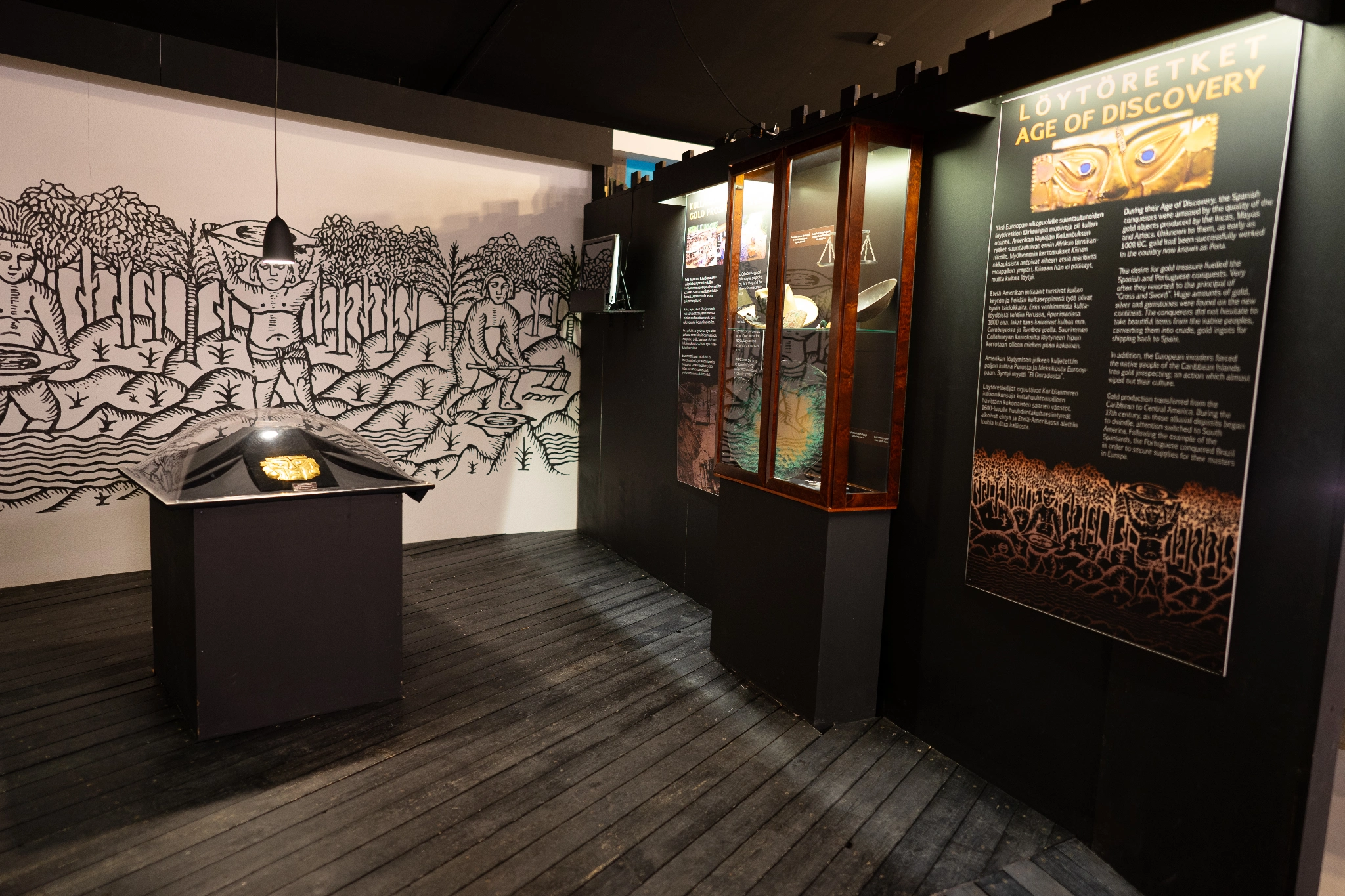
The Age of Discovery
During their Age of Discovery, the Spanish conquerors were amazed by the quality of the gold objects being produced by the Incas, Mayas and Aztecs of Latin America. Unknown to them, as early as 1000 BC, gold had been successfully worked in the country now known as Peru.
The desire for gold treasure fuelled the Spanish and Portuguese conquests of America and time and again, they resorted to the principal of “Cross and Sword”. Huge amounts of gold, silver and gemstones were being found on the new continent and the conquerors had no hesitation in taking beautifully designed items from the native peoples, and converting them into crude, gold ingots for shipping back to Spain. In addition, the European invaders forced the native people of the Caribbean Islands into gold panning; an action which almost wiped out their culture.
Gold production then transferred from the Caribbean to Central America and, during the 17th century, as these alluvial deposits began to dwindle, attention switched to South America. Following the example of the Spaniards, the Portuguese conquered Brazil in order to secure supplies for their masters in Europe.
Colombia
Colombia has rich gold history. In the area, the production of golden artefacts can be seen as local development periods during different eras. The groups that formed the periods had different cultural baselines. That could be seen, for example, in various techniques in shaping the gold as well as in approaches towards gold itself.
Gold was related to many cultures in both pre-Columbian and later societies. One example of pre-Columbian civilization is so-called Muisca (600-1600 AD). In this culture golden artefacts were both for offering and representing status. Small votive figures used in offering ceremony describe the culture on one part. One of the most known artefacts is probably Muisca-raft: an object referring to ceremony where becoming chief, covered with gold dust, jumped into the lake along with gold offerings and emeralds to the gods.
Specific to goldsmith work in South-West parts of Colombia was the use of remarkably pure gold compared to other parts of Colombia. From technical point of view it was straight working of metal, which required skills and very good knowledge about the properties of various materials.
Peru
The best-known civilization of early Peruvian prehistory is Chavin. It is one of the Peru’s oldest civilizations and laid the cultural foundations of all later Peruvian civilizations such as Moche, Chimu and Nazca. These cultures are known for their beautiful art but they were also innovative in metallurgy and textile production. Advances on metallurgy occurred such as joining pieces of pre-shaped metal sheets to form both objects of art and objects of practical use. The technique was applied also to gold.
The best-known civilization on Peruvian history is the Incas – partly because of the stories about their enormous golden treasure. Dawn of the culture is dated into the beginning of 13th century, and it lasted till 16th century. Inca Empire itself flourished only 100 years, starting from 1438 and ending when the conquistadors came in 1532. Gold played important role in Inca culture – not because of its material importance but its aesthetic value. Gold was symbol of sun, which played main part in their religion. Gold was “sweat of sun” and silver “tears of moon”. Ceremonial objects were golden, of course. One example of this is Tumi: a ceremonial golden knife used by a high priest when opening animal’s chest.

Theme
