Loading...
22. Japan

22. Japan
It was Marco Polo (1254–1324) who discovered the gold island with the name “Chipanqu” which meant “Japan”. He described how gold was used as money and that there were supplies in abundance. Gold coins were used to finance war expenses and the temples and statues of Buddha were decorated with gold. These stories fed the imagination of other adventurers in Europe and led to further explorations of the countries in the Far East.
Around 1500 a large deposit was found on the island of Hokkaido which caused a gold rush with up to 50,000 hopeful gold seekers arriving each year. Gold prospecting came to an end and account of regular disputes with the local people, the Ainus.
A second gold rush took place in 1900 when gold was found in the River Usotannai in Kitami, Hokkaido and earned the name, “The Klondike of East”. When Japan entered World War II, the government outlawed all prospecting with the result that gold is still being recovered by recreational panners in the rivers of Hokkaido today
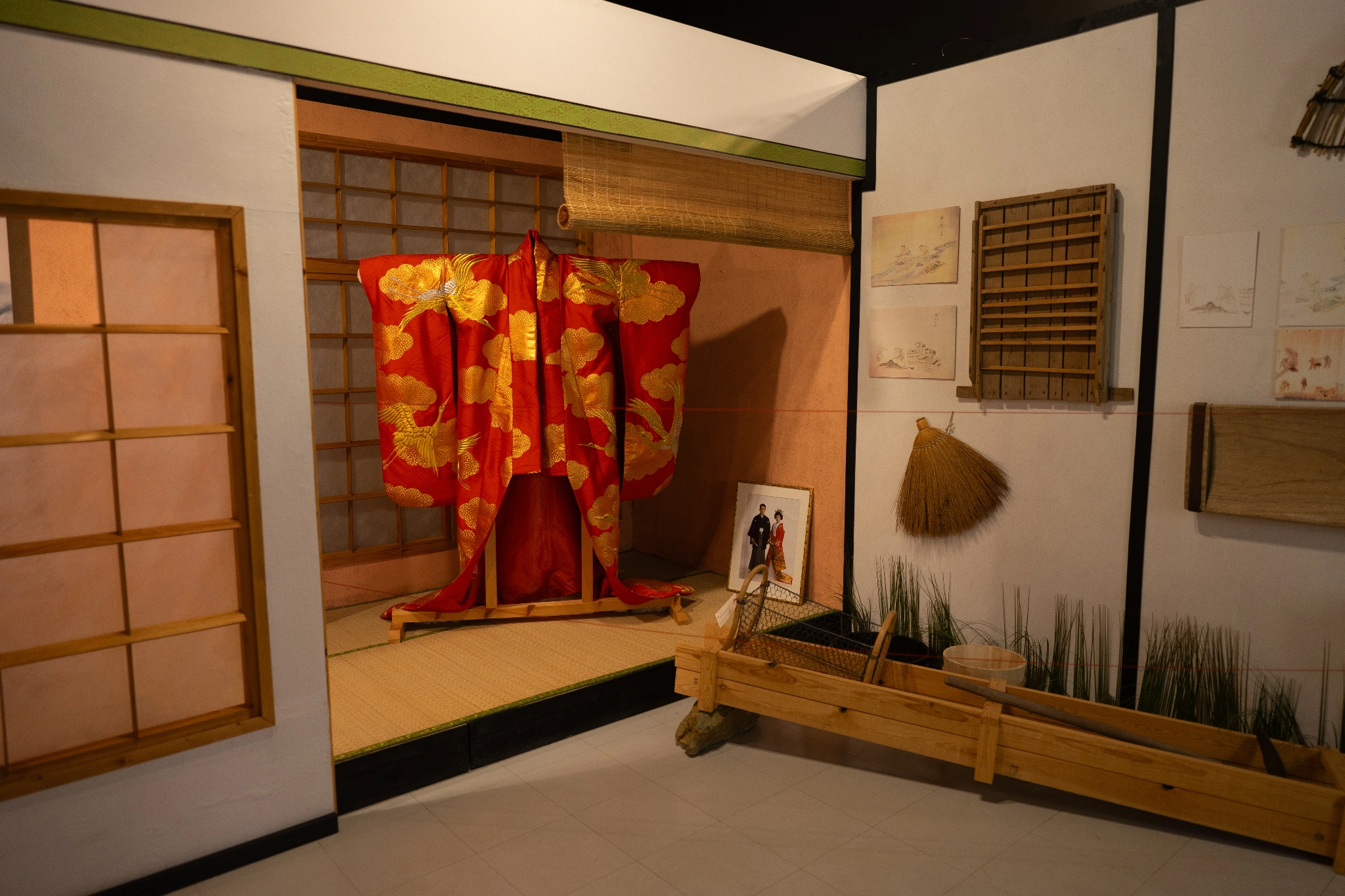
The kimono is traditionally decorated with gold thread.
Theme
