Loading...
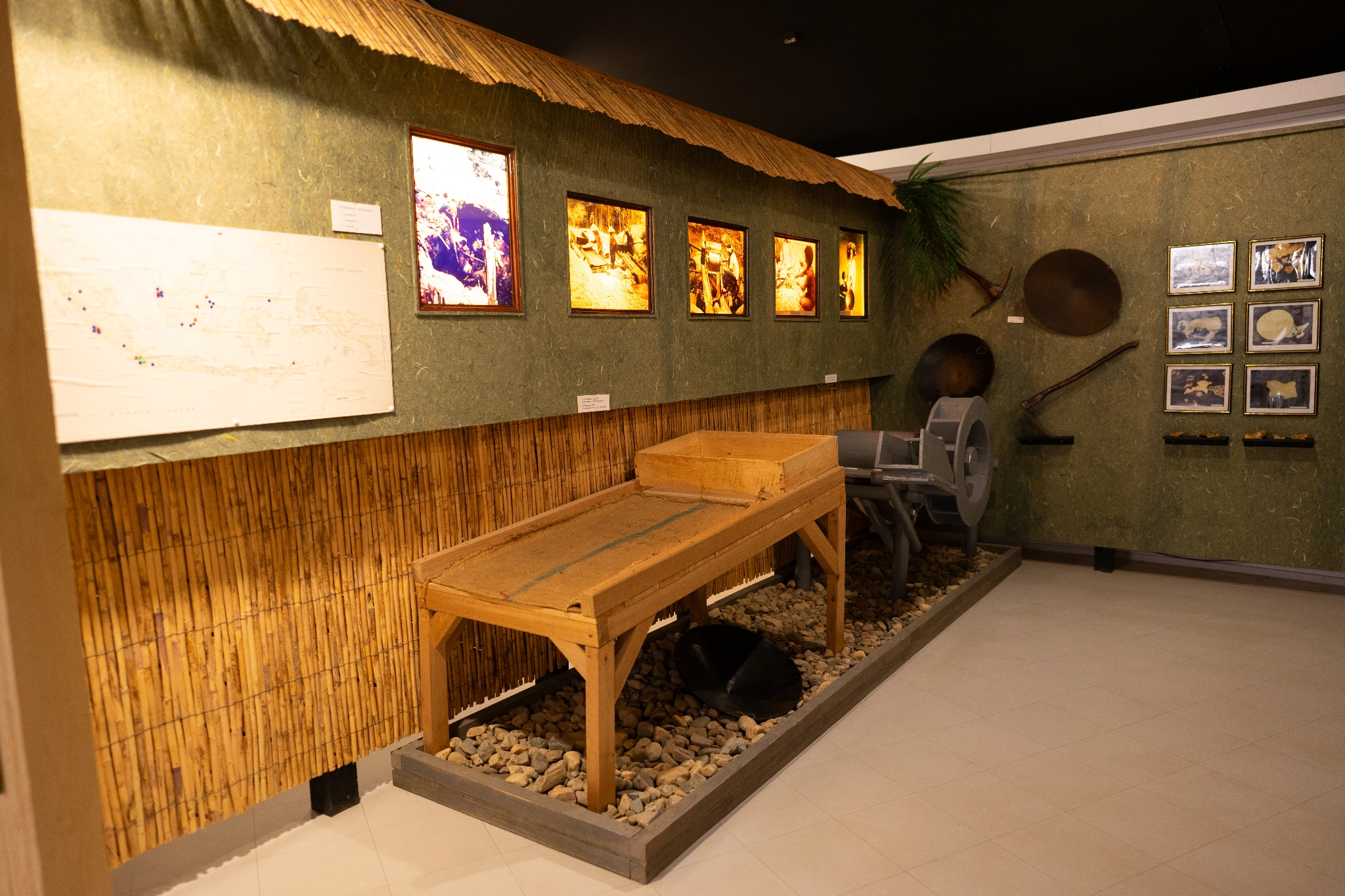
24. Indonesia, Myanmar

24. Indonesia, Myanmar
Indonesia
In Indonesia, there are still tens of thousands of individual people and families working on small scale gold panning sites, called people’s mining. Using mercury to separate gold from iron sand causes environmental damages, because mercury doesn’t disappear from the nature. Of course, mercury also causes health problems.
Myanmar (Burma)
Gold nuggets from the northern part of the country are beaten into almost transparent gold leaf which is placed between sheets of oiled bamboo paper for sale at pagoda and bazaars. One ounce of gold provides 10 square metres, The Mahamuni Buddha statue (“The Great Sage”) that is 4 m high is coated with layers of this gold. In some spots, the gold layer can be uo to 10 cm thick!
Although American companies have a commercial interest in mining the gold in Myanmar, most activity is carried out by country people who wash the gravel from the high banks of the fertile plain of the Ayeyarwaddy River. The prospectors at Myitkyna are usually women, who wash gravel all day for gold worth about 50 US cents, the same as the wage of a road construction worker.
The gold is very fine but is recovered in rockers made from bamboo: a lining of banana leaves makes very good riffles. In some parts of the river people work in teams and recover as much as 8 grams per day… which represents a fortune in the country. After panning the concentrate, mercury is used for the final stage. The people have been told of the danger, but they ask, “How are we to trap the gold without mercury?”.
The Shwedagon Pagoda, which contains eight hairs of the last Buddha, is plated with more gold than is held in the Bank of England. Over eight thousand gold tablets have been used on the exterior decoration.

Theme
