Loading...
Get to know Vesikko

Get to know Vesikko
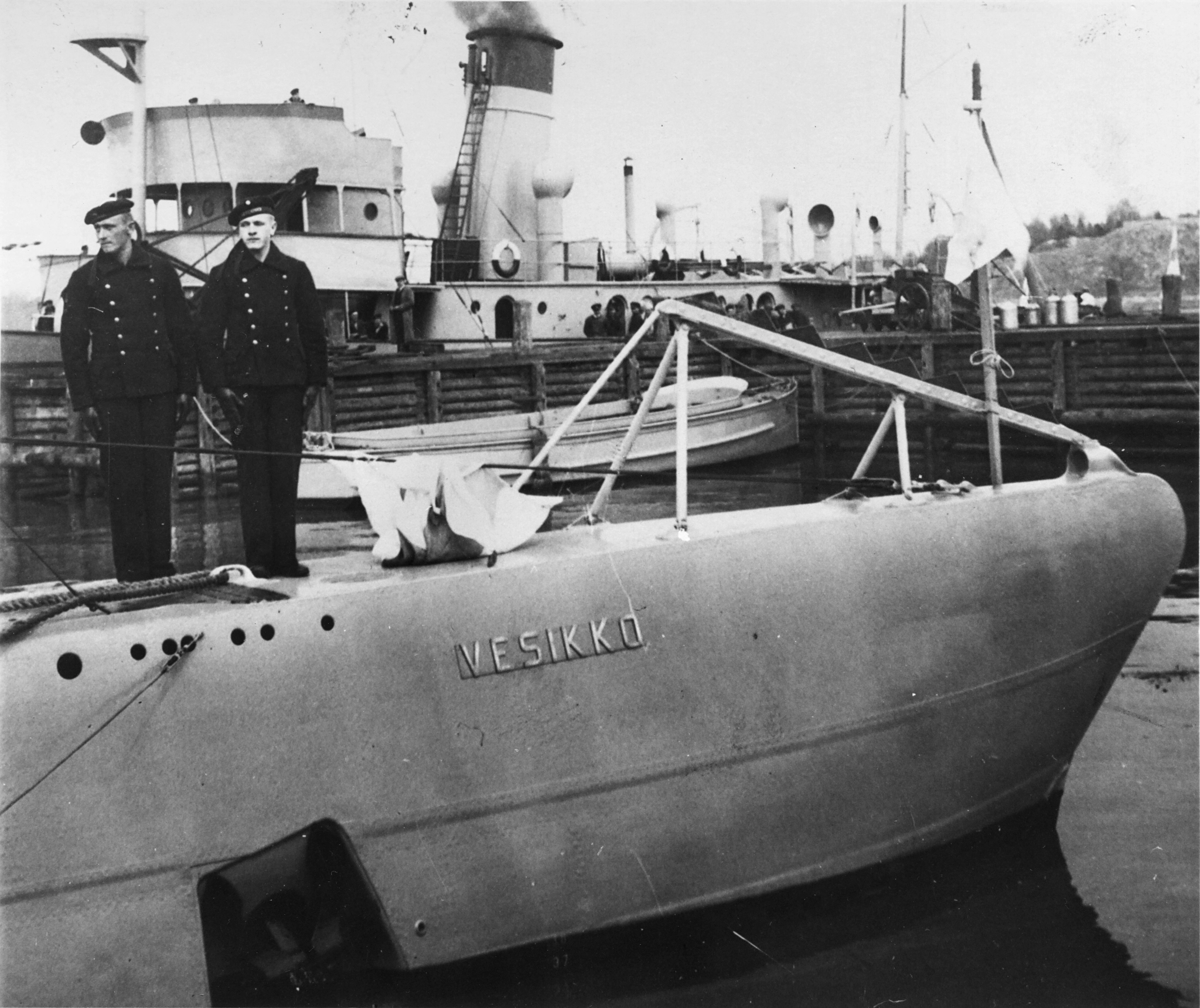
The submarine Vesikko is part of the Military Museum’s collection and one of the few remaining submarines from World War II. She has been a part of the scenery on Suomenlinna for almost all of her existence; as a part of the Submarine Flotilla, while awaiting her final fate after being decommissioned, during her restoration, and finally as a museum exhibit open to the public. Over the years, approximately one million visitors have visited Vesikko on Suomenlinna.
The CV-707, ordered by Germany and built by a Dutch engineering office, was built in Turku, Finland and launched in May 1933. To begin with, the CV-707 was in German use and included in German naval plans until the summer of 1934.
The Finnish state purchased the CV-707 in January 1936, and in April she was christened Vesikko (after the European mink, a small animal belonging to the weasel family that is at home in water and along the shores). In the 1930s, Vesikko’s tasks included participating in joint exercises of the submarines and the entire Coastal Fleet as well as submariner training. She also visited Estonia together with the Submarine Flotilla.
In the Winter War (1939–1940), the role of Vesikko and the other submarines remained small. In the Continuation War (1941–1944) Vesikko torpedoed the Vyborg, a Soviet freighter. Alongside her attack tasks, Vesikko patrolled the Gulf of Finland and protected trading ship traffic. Vesikko’s duties as a warship ended on 15 December 1944.
The Paris Peace Treaty signed after the Second World War prohibited Finland from having submarines. To begin with, other uses were sought for the submarines, but in the end, with the exception of Vesikko, they were sold to Belgium to be scrapped. For several years, Vesikko was allowed to decay until the decision was made to restore the vessel. After a long and demanding restoration, Vesikko began her new life as a preserved submarine in 1973.

Theme
