Loading...
4. Under the sea

4. Under the sea
00:00
00:00
Fascinating animals swim in the Arctic Ocean. Many of them are not found anywhere else in the world. The Arctic Ocean is rich in oxygen and nutrients due to water flowing from the great rivers of the North American and Russian coasts.
In the summer, the Arctic Ocean attracts marine mammals and birds also from a distance. Migratory fish, such as the Atlantic salmon, return to their home rivers and swim upstream to spawn. Marine mammals spend a significant amount of their time in the salty ocean water. Most of them rest on land or sea ice, but whales stay in the water.
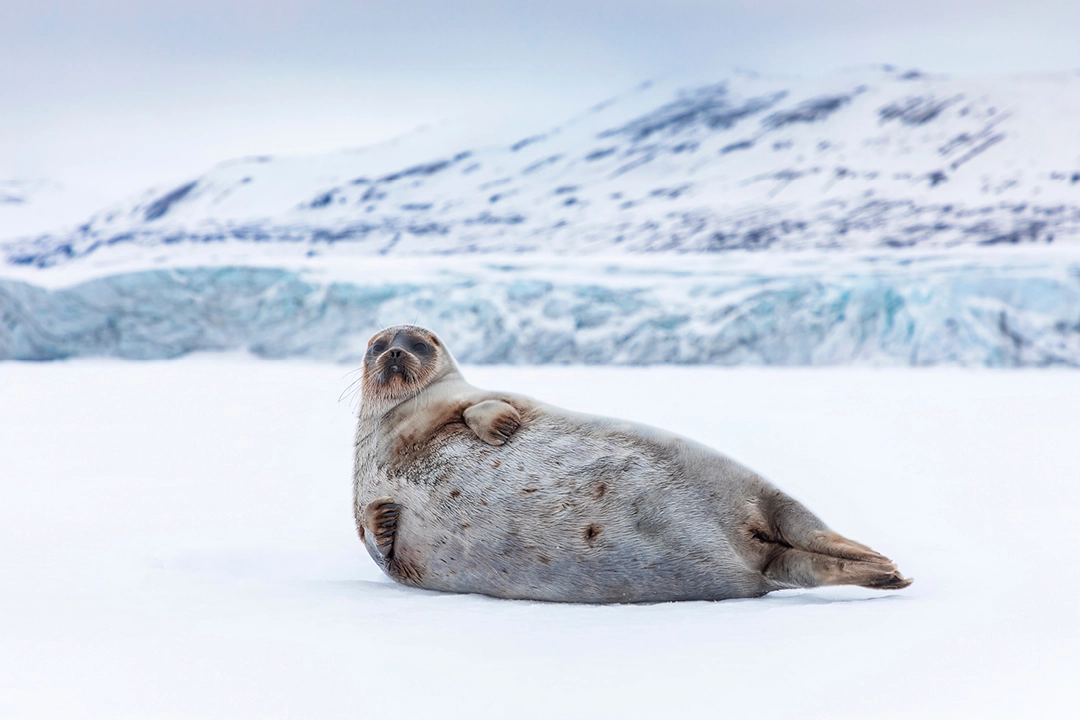
In the big photo on the wall, there is a ringed seal resting on the sea ice near Svalbard. Ringed seals are the smallest and most common of Arctic seals. They are the only northern seal species that can maintain breathing holes in thick sea ice with strong claws. Breathing holes have been found in sea ice up to 2 metres thick.
The ringed seal needs sea ice for breeding, moulting and resting. They survive the cold thanks to a very thick blubber layer under their skin. Females give birth in the early spring to a single pup inside a snow lair. The snow lair protects them from predators and cold. The main threat to seals is the loss of sea ice and snow cover.
The diet of ringed seals consists mainly of ice-associated crustaceans and fish. Ringed seals are the primary prey of polar bears who can smell them through the snow.
Seals are fundamental prey for many Indigenous peoples like the Inuit and the Yupik because seals can be hunted around the year. Ringed seals have provided a stable supply of meat and blubber. The hides can be used to make clothing, shoes, and kayaks.

Theme
