Loading...
Information about the Open-Air Museum

Information about the Open-Air Museum
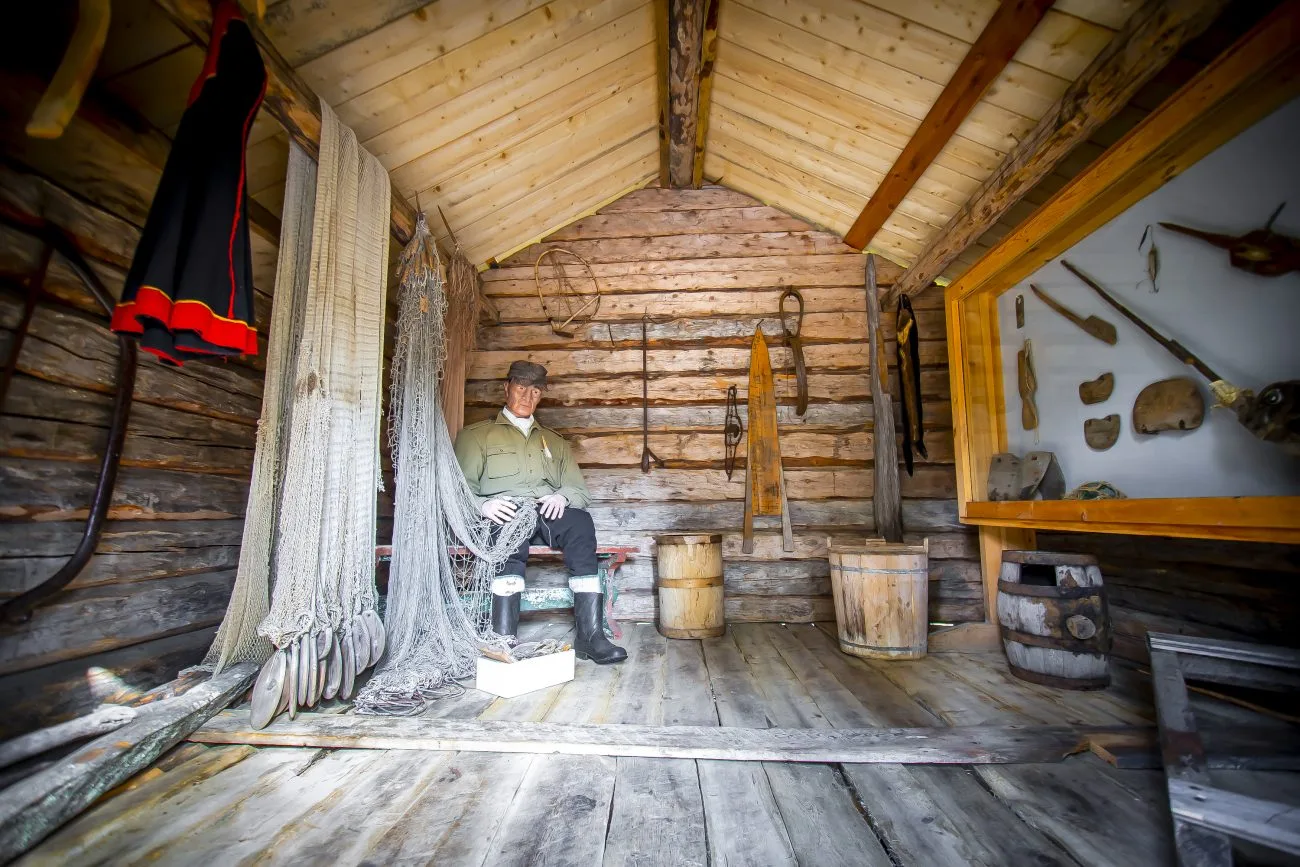
Siida’s Open-Air Museum showcases the cultural heritage, architectural heritage and livelihoods of the Sámi in Finland.
Our Open-Air Museum has much to view. The area has nearly fifty buildings and structures grouped by cultural areas and the nature of their use along an 800 metre-long trail in the shape of a reindeer herder’s lasso. The trail includes exhibits on the cultural heritage, built heritage and livelihoods of the three Sámi cultures in Finland.
The Open-Air Museum’s area is protected under the Antiquities Act. To avoid erosion of the delicate surroundings, please stay on the marked, gravelled trails. Pets are not allowed. The area is accessible by wheelchair and with a pram in summer and autumn.
History of the Open-Air Museum
The Sámi Museum was originally established as an open-air museum in 1959. It was established by Sámii Litto – Saamelaisten yhdistys ry., which was founded in 1945 as Finland’s first Sámi association.
The origin of the Sámi Museum is tied to the final part of the Second World War, the Lapland War. As a result of the war, the majority of Lapland’s infrastructure and property was destroyed. For example, more than 90% of Inari’s buildings were destroyed. The Sámi way of life also began to change after the war as a result of which homemade daily tools slowly disappeared. The Sámi became concerned about the changes to their material culture and the idea for establishing a museum came about.
At the beginning, collection and recording of cultural heritage was carried out in cooperation with student clubs from the University of Turku – Varsinaissuomalainen osakunta and Pohjalainen osakunta. The connection with the university was started by Professor Paavo Kallio, Director of the Kevo Subarctic Research Institute.
The Open-Air Museum was opened in summer 1963 as the first Sámi Museum in the Nordic countries. The Sámi Museum was solely an outdoor museum opened in the summer until the completion of the Siida building in 1998. Until then, all museum pieces were also stored in the Open-Air Museum’s buildings.
The Open Air Museum, which is over six decades old, has its own museum history, which also tells about attitudes towards the museum buildings and their repairs during different eras.

Theme
