Loading...
Restaurant kitchen from the 1950s
Restaurant kitchen from the 1950s
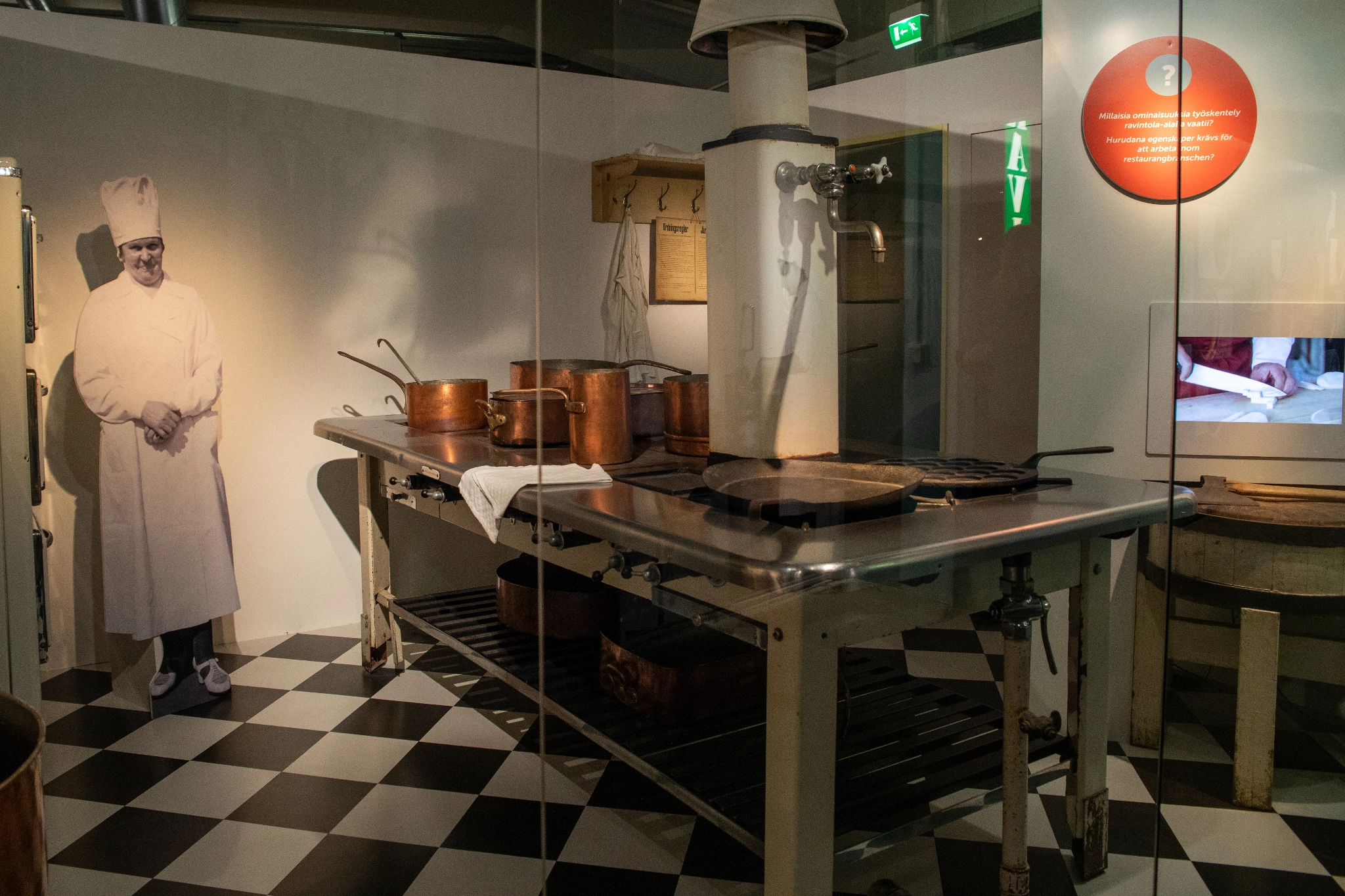
The restaurant kitchen on display is from the 1950s and contains machines and equipment from different places. In the 1950s, restaurant kitchens had more staff than they do today. Each person had a precise, defined role. Work was divided into the cold kitchen, hot kitchen, preparation area, and coffee kitchen. The structure of restaurant kitchens began to change in the early 1990s, and job descriptions became broader.
The hotel and restaurant sector, along with the service culture surrounding food and drink, developed in Finland during the 20th century. As Finland urbanized, the service industry became increasingly important. The accommodation and catering sector organized into unions and sought to raise the status of the profession. Schools for the industry were founded, and training for employers and supervisors was introduced. At the same time, the daily work environment changed. Strict, specialized tasks were replaced by work that required a wide range of skills and formal training. The challenges typical of the industry have remained much the same: full-time or part-time work, permanent positions or temporary jobs?
In the kitchen stands cold kitchen chef Mathilda Kinnunen. The photo was taken at the Finnish Hotel and Restaurant School in 1941. Employment in the restaurant industry has typically been short-term and seasonal. Mathilda Kinnunen (1888–1964) began her restaurant career as a cook on the Finnish Steamship Company’s vessel Vesta in 1912. After that, she worked as a cold kitchen chef and head cold kitchen chef in restaurants in Helsinki and Viipuri for nearly forty years. In the early 1940s, Kinnunen taught future professionals in the cold kitchen department of the Finnish Hotel and Restaurant School, but then returned to work as a cold kitchen chef for another ten years. Her last employment certificate is from 1951, when the 63-year-old chef had about forty years of work experience and twenty different restaurant jobs behind her. You can browse Kinnunen’s employment certificates on the wall opposite the kitchen.

Theme
