Loading...
4. A Funeral Procession Captured on Postcards Became a Tool of Resistance
4. A Funeral Procession Captured on Postcards Became a Tool of Resistance
00:00
00:00
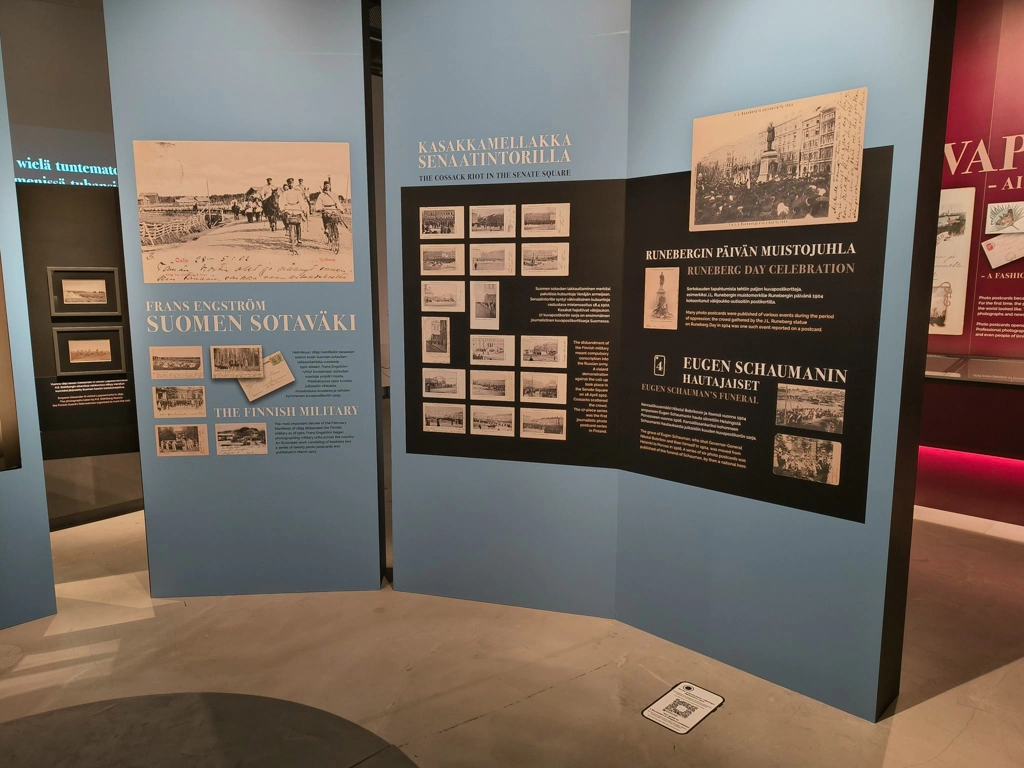
Photographs can convey political messages and serve as tools for social influence and resistance. Images of significant events can inspire citizens to demand change and participate in civic action. In Finland, photographs have also played a key role in sharing information during times when the law, society, and national culture were under threat.
From 1809 to 1917, Finland was an autonomous part of the Russian Empire. The Russification efforts that began in 1899 aimed to eliminate Finnish autonomy and shocked the Finnish people. Picture postcards became a means for Finns to spread news and propaganda—both domestically and internationally—about the Russification policies and the resistance against them.
In June 1904, nationalist Eugen Schauman shot and killed Governor-General Bobrikov, a symbol of oppressive rule, and then took his own life. The Russians buried Schauman in an unmarked grave, but once the repressive measures ceased, his body was moved in a ceremonial procession to the Schauman family grave in Porvoo. Photographer Emil Rundman captured the transfer and the accompanying celebrations in 1906. Rundman also documented protests against oppression, which were published as postcards.
What role do photographs play in today’s civic activism? Who takes these pictures, and through what means are they shared?

Theme
