Niemelä Tenant Farm


Niemelä Tenant Farm
The Niemelä farmhouse is the first group of buildings to be relocated to the open-air museum. The farm was relocated to the museum from Konginkangas, Central Finland, and its arrival in Seurasaari marked the establishment of the open-air museum.
A torppa was the term used of a tenant farmer's dwelling. The farmer did not own the land he cultivated, but paid rent to the farm on whose land it was located. Usually the rent was paid in products the farmer had produced or he worked some days on the landowner's farm.
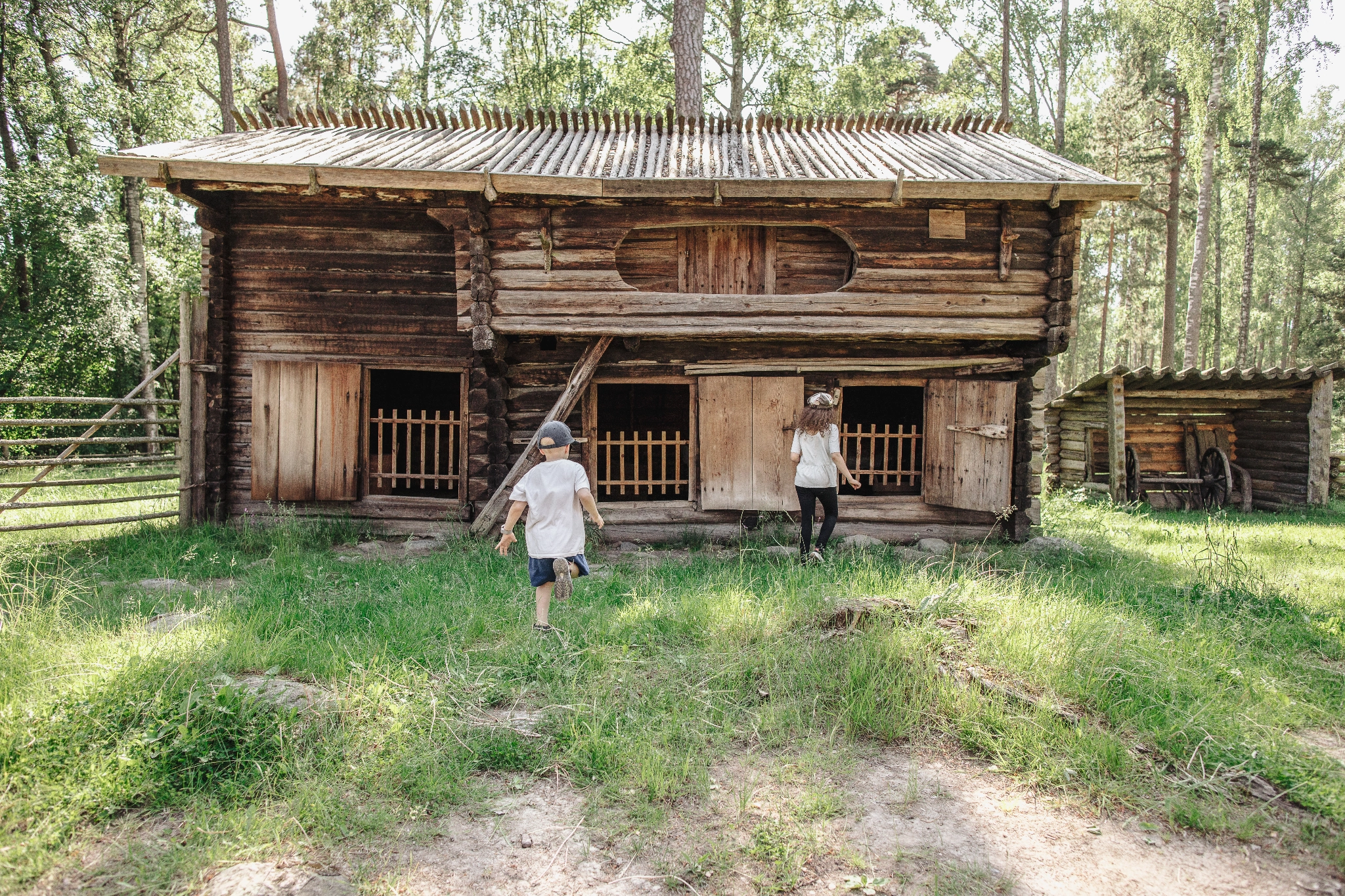
The main building consists of a sauna and a dwelling: the smoke sauna was built in the 1770s and a new dwelling was built in the 1840s to replace an old one. In the courtyard there are several storehouses, animal sheds, a cookhouse and a granary. The number of buildings indicates that the farm was relatively prosperous.
The layout of the outbuildings of the Niemelä farmhouse on the museum site follows their original layout. Above the stable door a five pointed star is carved, which was considered a magic mark, it was intended to protect the cattle. The markings were common in folk buildings and were intended to guarantee the good fortune of the house.
In the 1890s, two households lived in the Niemelä farmhouse, and it remained so until it was moved to the museum. The last residents were 80-year-old Heikki and 22-year-old Iida.