Loading...
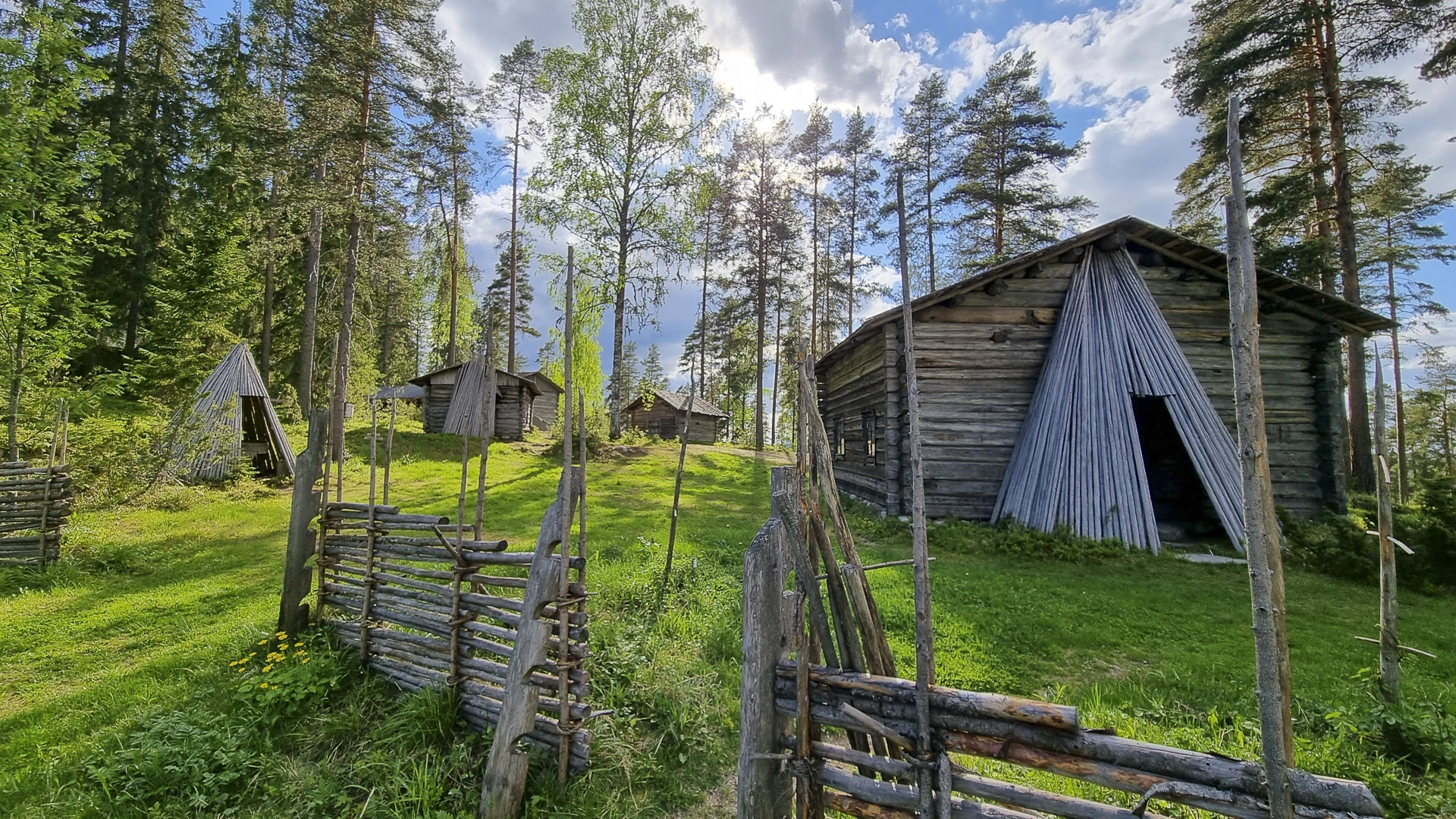
Some Cottage "Tuomisto"

Some Cottage "Tuomisto"
At the time this house was built, Finland was sparsely populated and the standard of living was low. Buildings were made entirely of wood, sourced from nearby forests. Ordinary rural homes were not equipped with chimneys. When the large oven was heated, smoke filled the room, rising and exiting through an opening in the roof. Below the smoke layer, the air was clearer. Food was cooked either by baking in the oven or in pots placed over embers at the front of the oven. The cooking temperature was adjusted by raising or lowering the pots using hangers. The area between the oven and the back of the room served as the women's workspace and living area. During the warmer months, meals were often prepared outdoors in a traditional hut (kota).
Lighting was poor. In the earliest times, window glass did not exist. Light entered through the smoke outlet and a piece of translucent pig bladder stretched across a hole in the wall. Additional light came from burning wooden splinters called “päre,” which burned slowly with a small flame. Smoke darkened the walls over time. As wealth increased, glass windows became more common. Water was fetched and carried in from a well.
During winter, the earthen-floored section near the house’s main door housed chickens, piglets, and calves. In the coldest periods, even the horse was brought inside from outdoor work to stay warm and feed. Sharing living space with animals degraded indoor air quality and increased humidity, creating ideal conditions for illness. A serious danger was posed by carbon monoxide—an odorless gas formed by glowing embers.
The house was originally built in the 18th century on the farm “Vanginpää,” located in the village of Hytölä in western Konnevesi. In the early 1900s, the building was moved to the farm “Tuomisto,” from which it now takes its name. Remarkably, it remained in residential use until 1958, when it was dismantled and relocated to its current location at the museum.
From the 1700s onward, as living standards improved, buildings evolved. Glass windows became larger, and chimneys began to be installed, significantly enhancing comfort. Today, this building features a simple lean-to style entry made of upright wooden poles—a poor man’s porch. An old photograph shows a central unheated entryway where animals may have been kept. A 1681 building regulation required larger farms to have a guest room, which is visible at the right end of the house in the old photo.
The house now displays artifacts from different eras and serves as a venue for events and concerts. It has hosted performances ranging from folk artists to opera singers.
Your feedback is important
Did you enjoy this information?

Theme
