Loading...
Smoke sauna
Smoke sauna
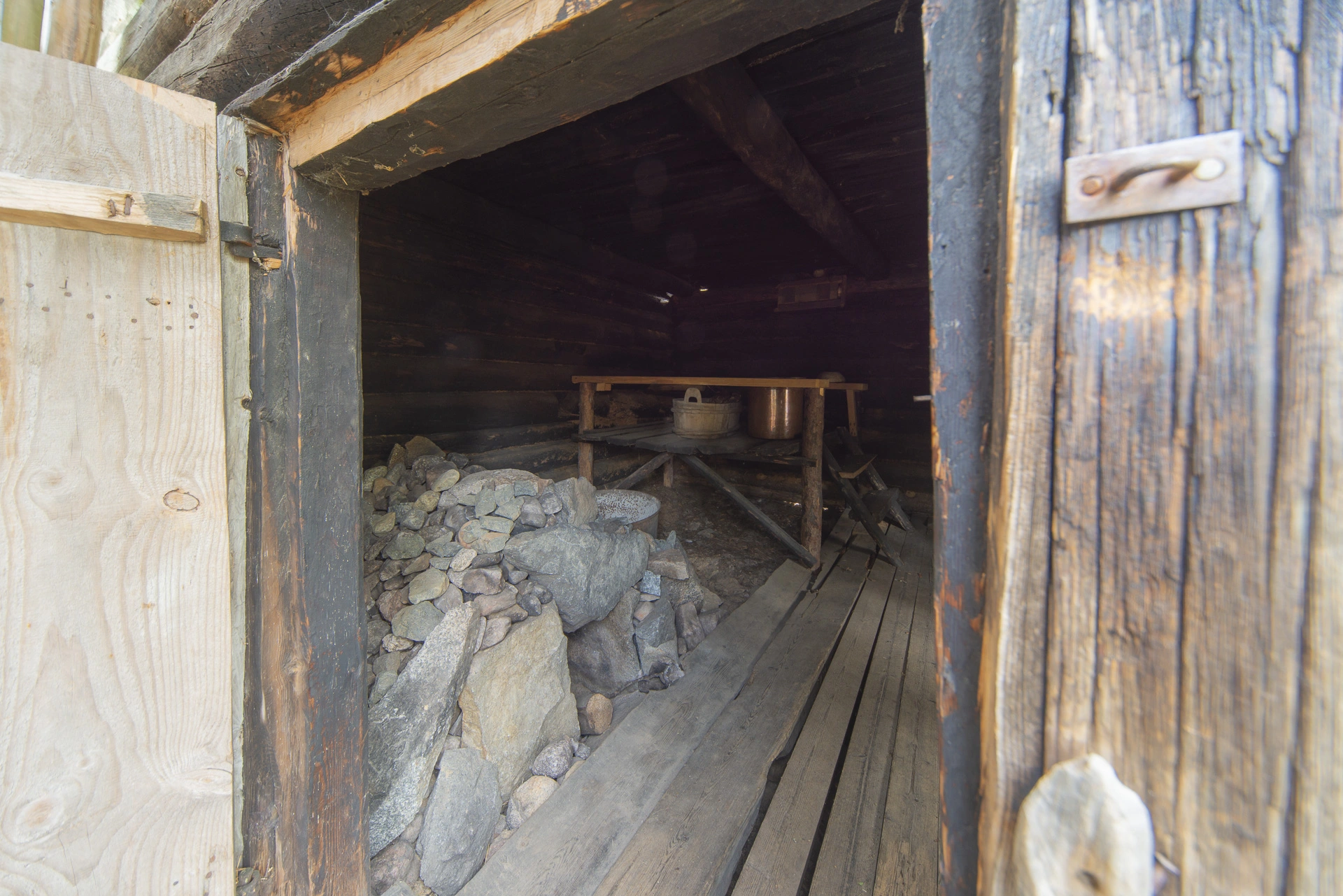
The sauna has been—and continues to be—an essential part of Finnish living. The museum’s sauna originates from the eastern part of Konnevesi, from the “Korpela” house in the village of Hinkkala. It was built from logs in the 19th century, and its stove, or “kiuas,” is made of stones. This sauna has no chimney, and is therefore called a “smoke sauna” (savusauna in Finnish).
The primary purpose of saunas is washing. Dirt is released from the skin through sweating caused by the heat. This cleansing effect is enhanced by throwing water onto the hot stones, which produces a burst of hot steam called “löyly.” Another traditional intensifier involves lightly whipping the body with a bundle of leafy birch twigs, known as a vasta or vihta. This ritual promotes a deep sense of well-being throughout the body.
The sauna is a warm and clean space. It was used not only for washing, but also for childbirth and healing. Even the deceased were sometimes prepared for their final journey in the sauna. In a smoke sauna, which lacks a chimney, firewood is burned beneath a pile of stones that form the stove. Smoke rises toward the ceiling and exits through an opening. Once the stones are hot enough, the fire is extinguished, the smoke clears out, and the sauna is ready for bathing.
Modern saunas typically have a metal stove (kiuas) and a chimney, or are heated electrically. These modern versions are free from the soot caused by smoke and carry a lower risk of fire.
Your feedback is important
Did you enjoy this information?

Theme
