Loading...
The Manor’s Stable, Cowshed, and Hay Barn
The Manor’s Stable, Cowshed, and Hay Barn
During the era depicted by the museum’s buildings, livestock was kept primarily to provide milk and meat for the household. Animals also provided wool and leather for making clothes. Nearly everything was made at home. The village shoemaker made the shoes. On an average family farm, the number of animals was not large. Even in the late 19th century, it was difficult to provide animals with enough food for the winter. Many diseases plagued the animals. The best hay was reserved for the horse, and cows often did not produce milk during winter. The situation improved around the turn of the century with increased education and the skills it brought.
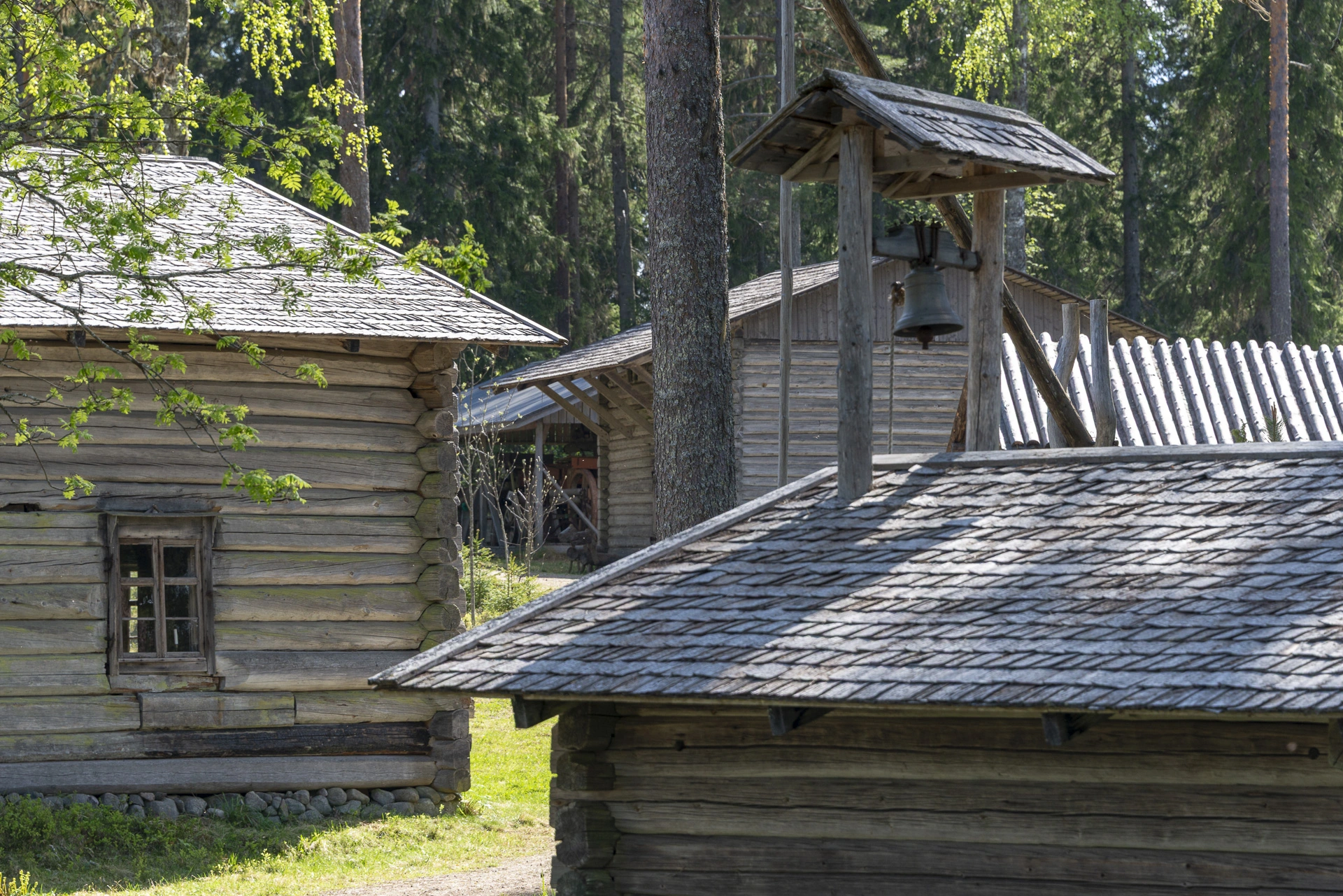
The museum’s building group includes a stable for a horse, a cowshed (barn) for cattle, and a hay barn for storing fodder. Manure was removed from the cowshed in the spring and usually spread on the fields. Animals required a lot of water, so the cowshed was located close to a well. Near the museum buildings, there is also a fenced pasture area for sheep. The traditional fence, called pisteaita, is made from young trees. During the summer, the museum often has sheep grazing the area naturally as part of preserving a traditional biotope.
Animals had to be protected from predators, so they were kept indoors. When animals were taken to forest pastures, a herder accompanied them. Concerns for safety were so great that large predators like wolves and bears were hunted so intensively that they became very rare or disappeared entirely from some areas. Moose were also heavily hunted and were rare in the early 20th century. Birds and smaller forest animals were hunted for food and fur.
Income was earned by selling butter, meat, hides, and furs. Animals themselves were also traded. The most important item to purchase was salt. Iron also had to be bought to make essential tools. The state imposed regulations on trade, and poor or nonexistent roads made trading trips difficult.
The museum's cowshed was built in 1983 using logs from a demolished building, following the model of old, small cowsheds. The hay barn was relocated from the village of Pyhälahti in the northern part of Konnevesi in 1984.
There is a food bell on the cowshed roof, used to call the farm workers in from the fields for meals. The bell could also be rung to summon help from neighbors, as there were no other means of communication. The passage of time during the day was not particularly important. The rooster woke people in the morning. Clocks that showed the time began to be manufactured in increasing numbers and purchased from the late 18th century onward.
Your feedback is important
Did you enjoy this information?

Theme
