Loading...
Storehouse for Milk Processing Equipment
Storehouse for Milk Processing Equipment
Dairy products have a long and significant history. Cream is separated from cow’s milk, and butter is made by churning the cream. Butter became an important source of income in the late 1800s, when farms began delivering cream to dairies. These dairies did not process the highly perishable milk itself, which was instead used on the farms. Finnish butter was exported to England and to St. Petersburg in Russia. This opportunity also opened up for inland dairies as the railway network expanded.
Milk was usually stored and consumed mainly as sour milk products, such as piimä and viili, until the early 1900s. Cheese was also produced. Piimä was kept in large vessels called sammios. The development of dairy farming involved much research and education. For export cooperation, the “Butter Export Cooperative Valio” operated laboratories where butter quality from various dairies was inspected. From there, advice and knowledge from the latest research spread to local dairies and further to farms.
By the mid-1900s, many small dairies, including the Konnevesi dairy, had ceased operations. Thanks to improvements in transportation and technology, dairies began to receive milk from farms. The price paid for the milk was determined by its fat content. Inspectors visited farm to farm making measurements, using equipment stored in this storehouse.
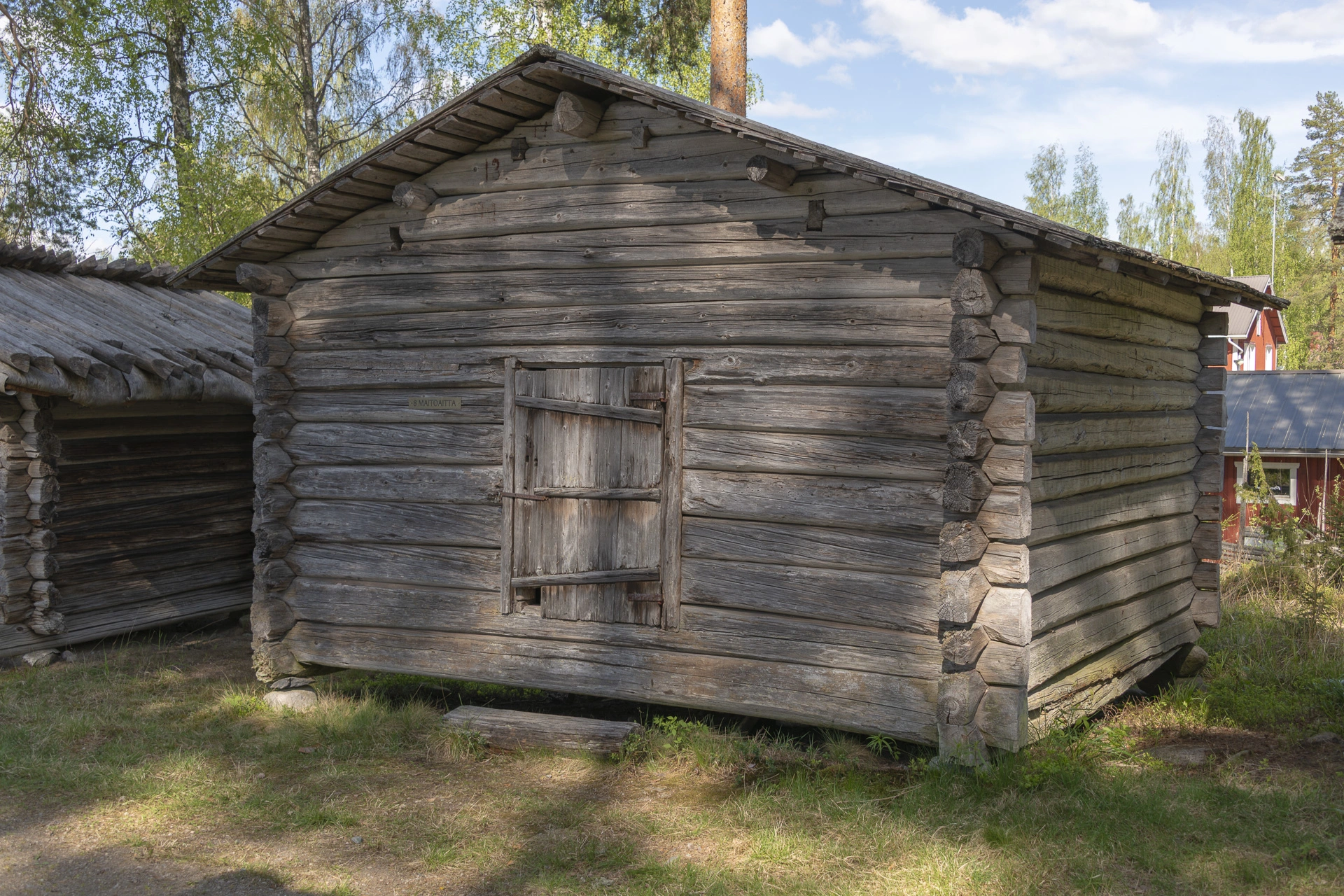
This building contains equipment related to milk processing, such as churns, a separator which greatly facilitated cream separation, a rotating butter kneading table used to press excess water out, as well as various sieves and storage containers. For milk preservation, it was important to cool the milk. During winter months, ice was taken from water bodies and carefully stored to last until the next winter.
This storehouse was brought from a nearby farm called “Kuusela.” From the storehouse begins an augmented reality experience trail called the “Cow Path,” a few hundred meters long, telling the history of cattle farming. Each sign along the path has its own QR code and general instructions for use.
Your feedback is important
Did you enjoy this information?

Theme
