Loading...
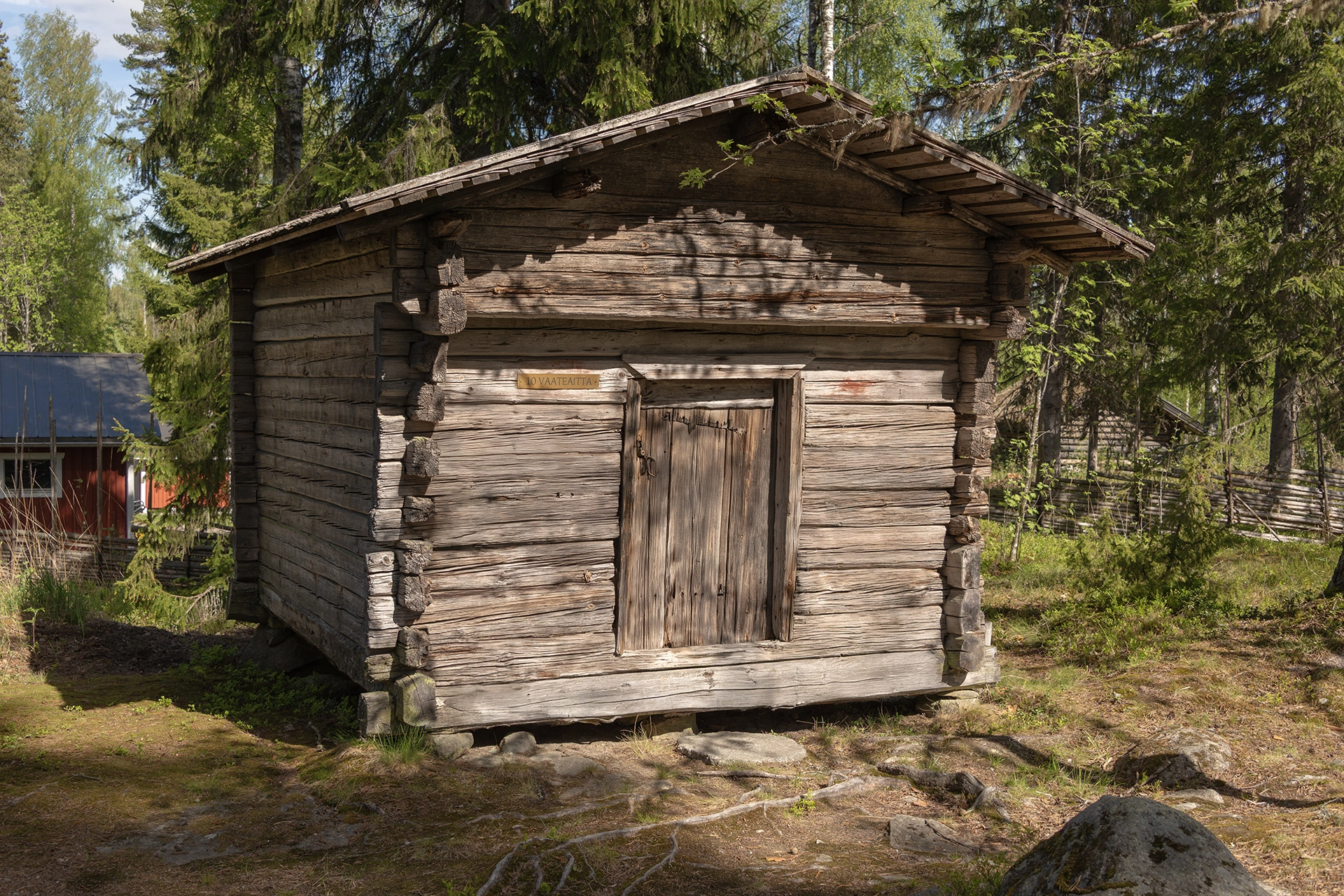
Clothing Storehouse

Clothing Storehouse
This is a storage space for clothes and textiles. Old residential buildings did not have storage spaces like modern homes, so belongings were kept in storehouses. However, the amount of goods was not as large as it is today.
Yarns, fabrics, bedding, and also clothes were made and repaired by hand. The work was extensive, so textiles held significant value and careful preservation was important. Traveling merchants sold the fabrics and materials needed for clothing.
There were changes in clothing. By the mid-1800s, plain, undyed gray woolen fabric was no longer acceptable for everyone. This sparked criticism, as some wondered why young people wanted to wear dyed wool or broadcloth outer garments, which were considered vanity. Eventually, permission for a dyer to settle in the region was granted by the imperial senate after the mid-19th century.
The interior of the clothing storehouse includes perches and a bed. People slept in storehouses except during the coldest seasons. This storehouse also comes from the “Eerola” farm.