Loading...
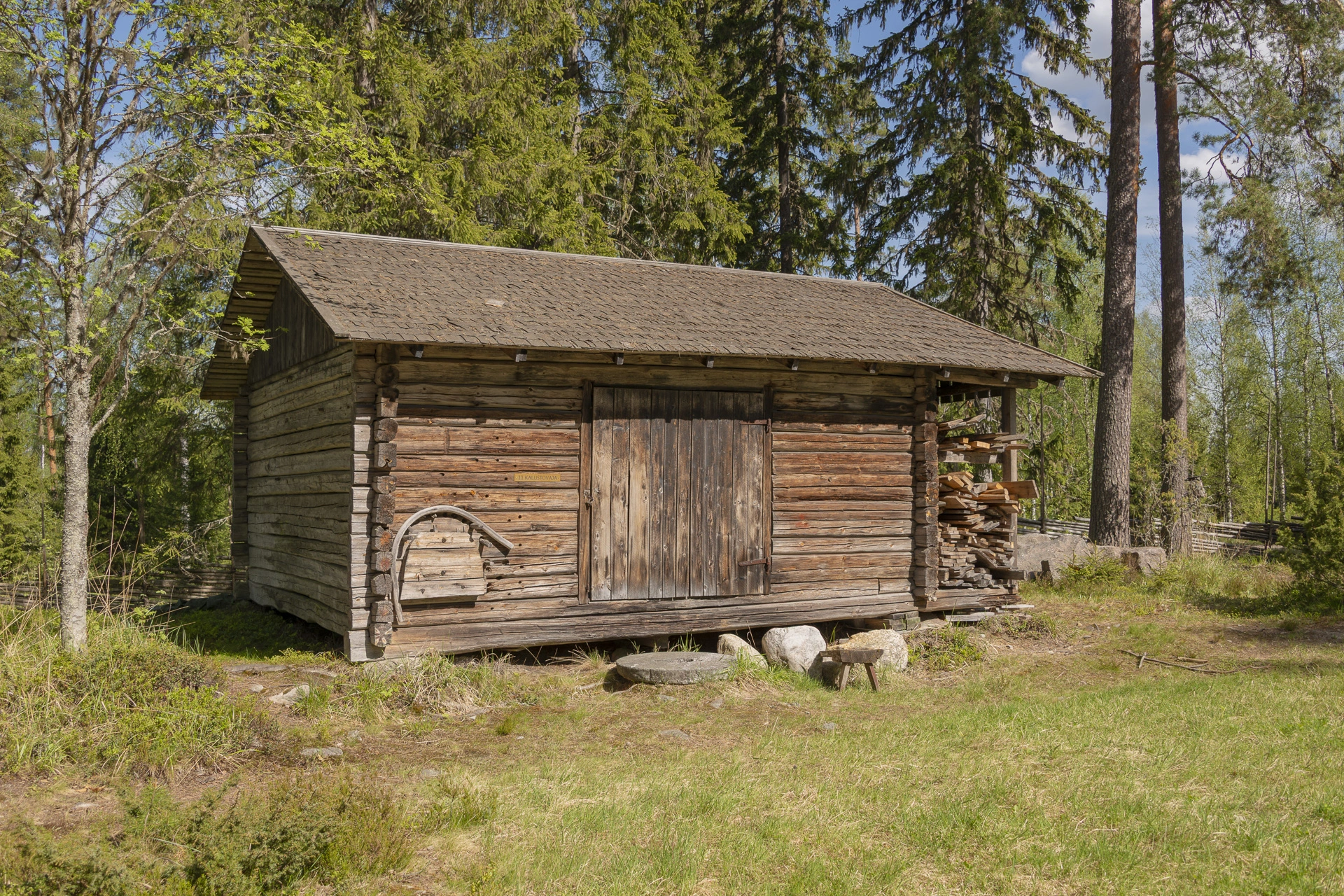
Storage Building

Storage Building
On the front wall of the building, there is a harnessing wooden piece called a luokki and holes needed for its preparation. The luokki is a curved wooden arch that goes over the horse’s back from one shaft to the other and connects to the länki. The luokki prevents the shafts from pressing against the horse’s sides. This harnessing method is known not only in Finland but also in Russia and the Baltic countries. The design helps ease pulling in difficult conditions, such as in snow. Before the wider use of tractors in the early 1960s, the horse was the most common and important power source for agriculture and forestry.
The luokki was bent into an arch shape from wood. As a pre-treatment, the wood was soaked and heated. Common materials included bird cherry, juniper, rowan, and birch. If the luokki broke during work, a temporary arch was made by tying two flexible willows together back to back.
The early 19th-century building originates from the “Pykälämäki” farm in the village of Jouhtikylä, Konnevesi. This storage building, which supports the museum’s operations, is not open to the public.
Your feedback is important
Did you enjoy this information?

Theme
