Loading...
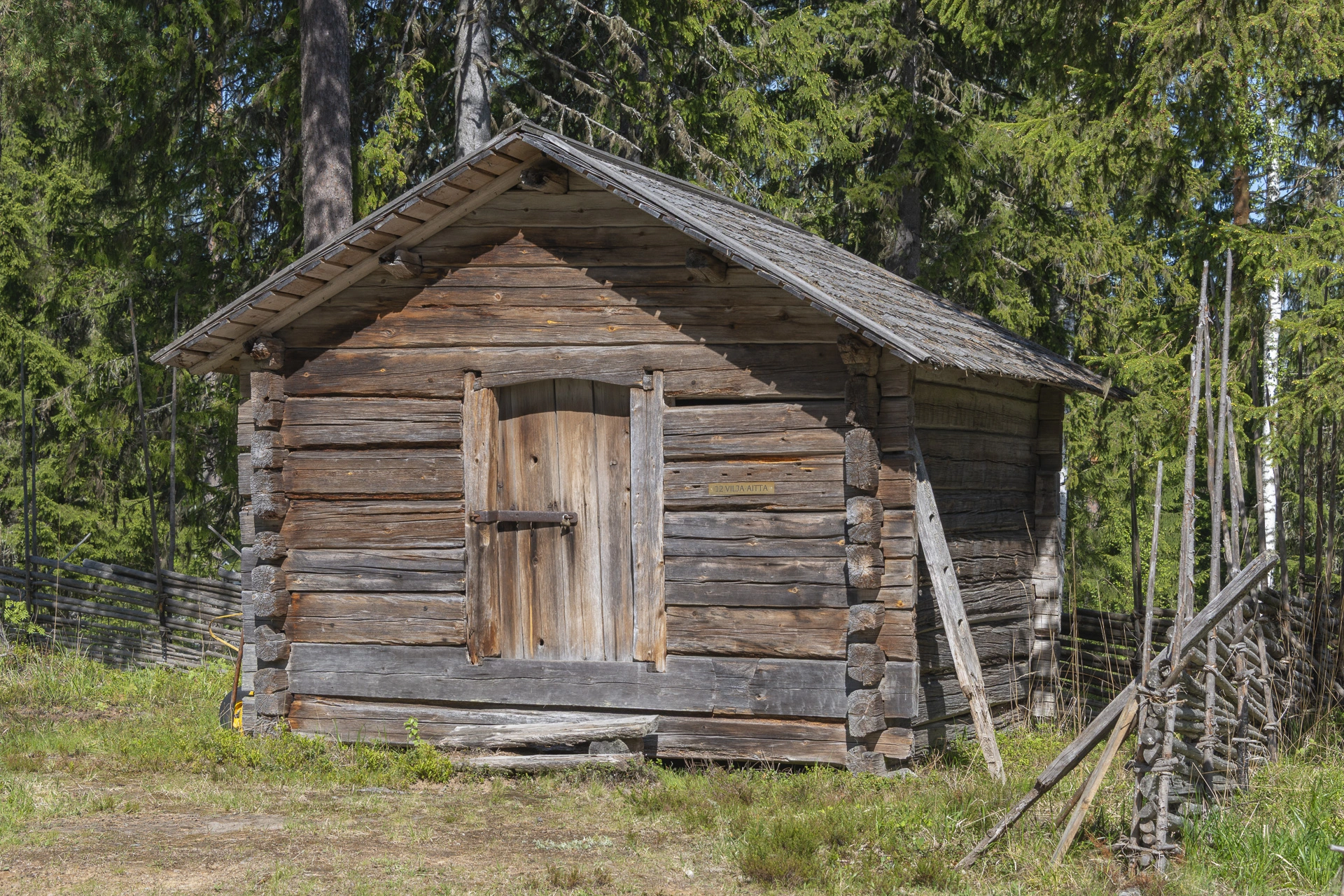
Grain Storehouse

Grain Storehouse
Seed grain and grain for consumption were stored in a specially furnished storehouse for this purpose. Peas, beans, and groats were also kept there. Breads could be stored mixed in with the grain. The grain storehouse was the most valuable building on a homestead in terms of its contents. It was located away from buildings considered fire hazards, such as the sauna, smithy, and drying barn.
The grain storehouse contains fixed bins as well as various containers and barrels for storage, along with necessary tools. The door is sturdy and equipped with a lock. Rodents were kept away to prevent spoiling the food supplies. Cats performed this important task.
The most important task of each family and community was to ensure their own survival by producing and storing food. In the mid-1700s, a decree from the Diet required that a grain magazine be established in every parish. Grain stored there was used as food grain and seed grain in the event of crop failures.
Storehouses are very long-lasting buildings. Their somewhat fragile structure helps keep them dry, and they can last hundreds of years as long as the roof remains intact. This storehouse originates from the “Muikkuniemi” farm in the village of Äijälä.
Your feedback is important
Did you enjoy this information?

Theme
