Loading...
The Well

The Well
Wells are important features of every homestead yard. When a new dwelling place was established, it was necessary to determine whether a well could be dug there—unless there happened to be a good natural spring nearby. This required understanding how water moves through different soil layers. Groundwater can be found in moraine and gravel layers on slopes and low-lying areas.
A typical well is about 5–6 meters deep. In old times, wells were made by digging a large pit with shovels. Stones were then placed in layers around the pit in a circular pattern, after which the perimeter was supported and filled so the stones wouldn’t move. The entire process was hard and required skill. Folk beliefs held that the location of a well could be found, for example, by using a twig that bends in the hands.
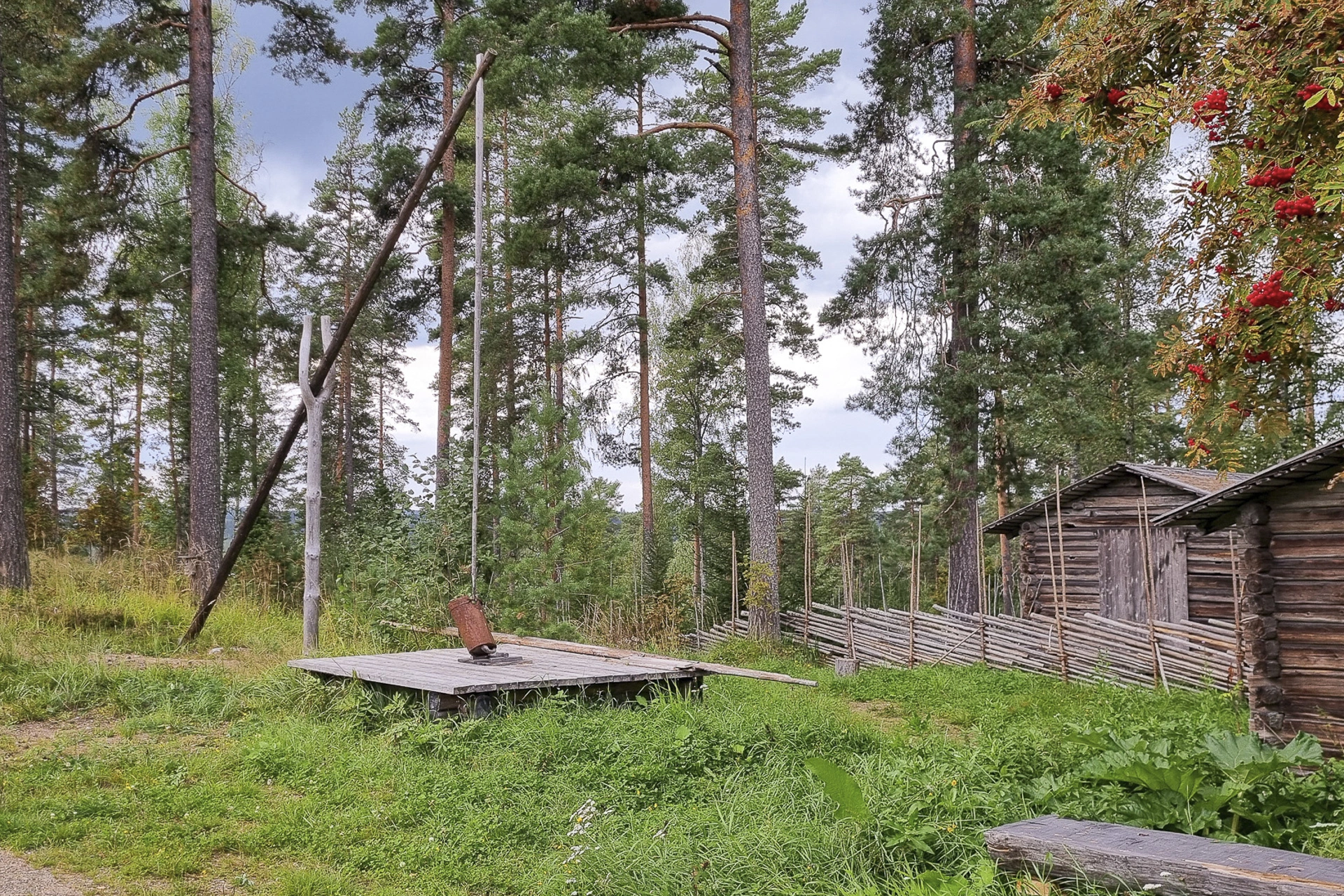
Many devices have been developed to make drawing water easier. The most traditional is the lever well (called “vinttikaivo”), where a long wooden beam allows a water bucket to be lifted relatively easily from the well. Adding a counterweight to the beam helped with lifting.
At the museum’s well site, there is no actual well because the bedrock lies very close to the surface in the museum area.
Your feedback is important
Did you enjoy this information?

Theme
