Loading...
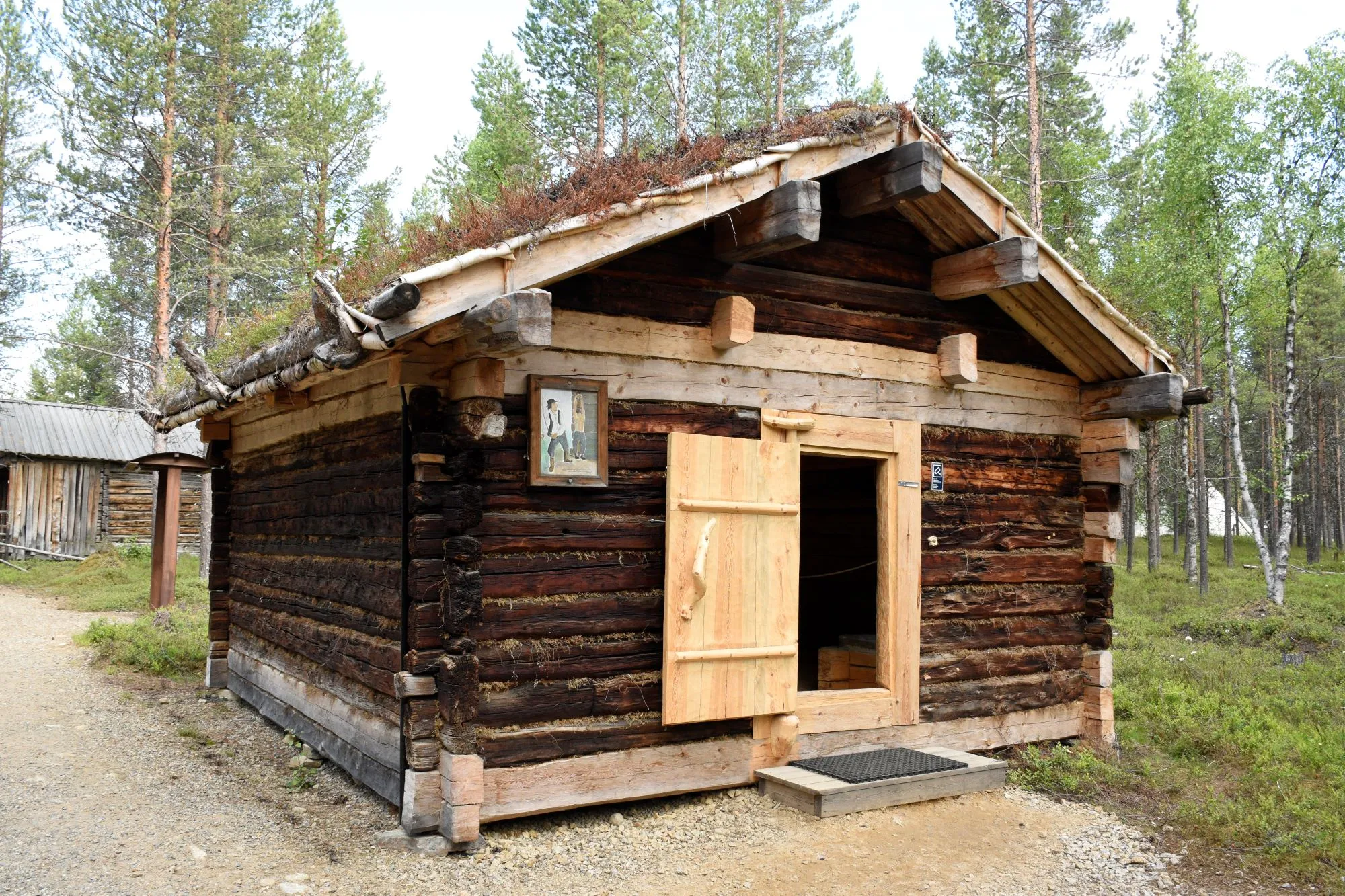
Mirhami's hut

Mirhami's hut
Mirhamintupa (“Myrrh Hut”) is probably one of the twelve huts the authorities had built on the Kittilä–Utsjoki bridleway. It may also be the only hut between the two communities that has survived. Due to its practical location, Mirhami Hut was used as a courtroom in which local crimes were tried. According to the law that was in force in the 1800s, court sessions were to take place in the municipalities in which the crimes were committed. Since the cabin was located on the border of two municipalities, the judge did not have to travel so far.
The marks, initials and dates carved on the inner walls are the most valuable part of the building. Some of the inscriptions are from a time when punishments were carried out in the hut, while others date back to a period when the hut was a wilderness hut in which travellers stayed overnight. As a museum building, the hut gives a historical insight into Finnish administration and court practices in the Land of the Sámi.
The 7–8 tiers of timber in the middle of the frame represent the original and most visible construction phase of the hut, dating from the 1800s. Of the other structures from the 1800s, only small fragments have survived; these include the broken ends of table pegs on one wall and the end of a purlin that was nailed at the end of a cross beam. All the other parts of the hut were apparently made in 1967 when the building was erected on the premises of the Sámi Museum in Inari. Mirhami Hut was in bad condition when it was moved to the Sámi Museum, and it was restored in 2019–2021, leaving the parts from the 1800s as intact as possible.
Your feedback is important
Did you enjoy this information?

Theme
