Loading...
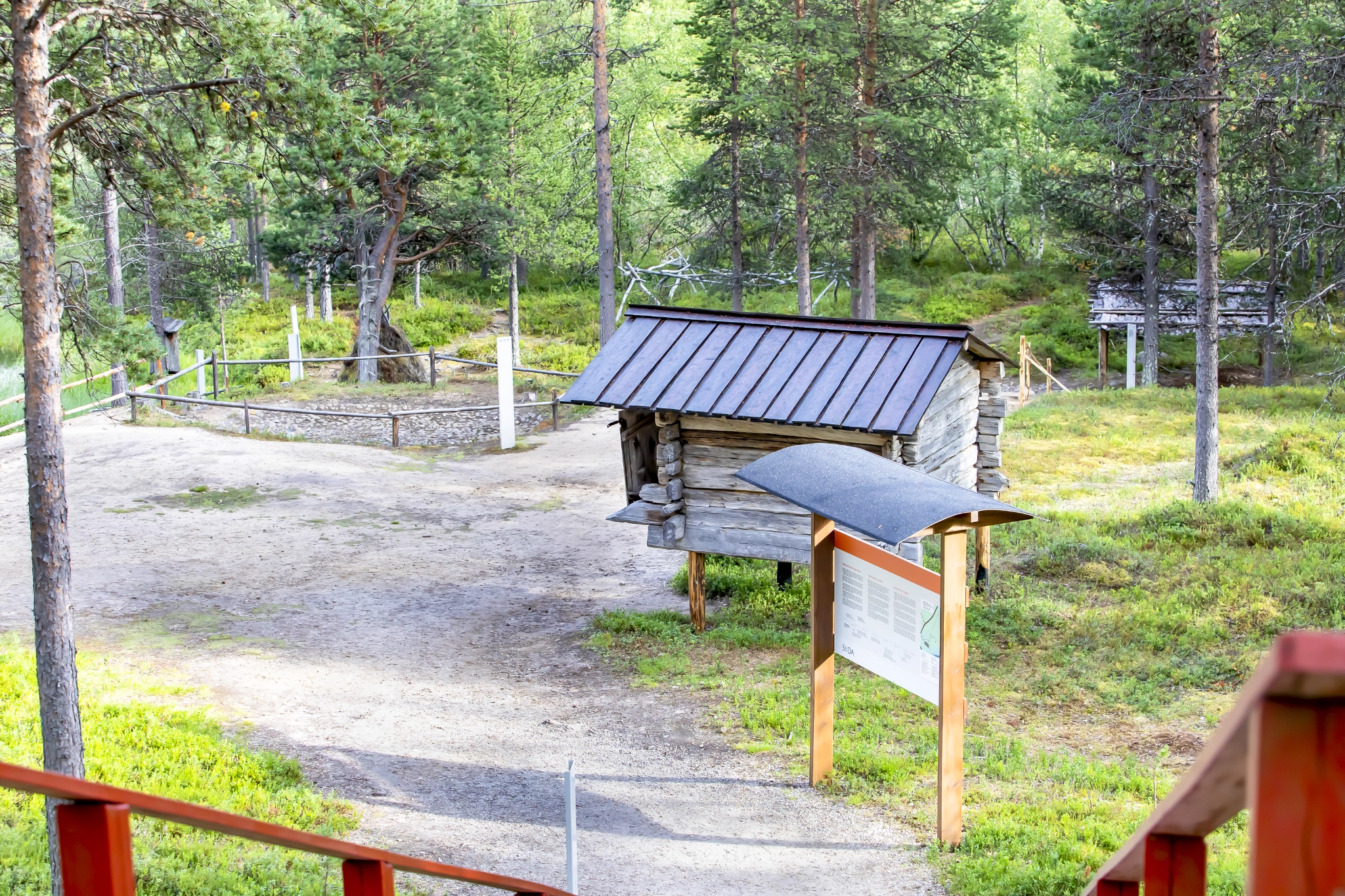
Inari Sámi Summer Place

Inari Sámi Summer Place
Earlier, the Inari Sámi living near Lake Inari migrated between their summer and winter places.
The summer places were often located on the shores and islands of Lake Inari, whereas the winter dwelling sites were in more sheltered forest areas near small bodies of water where firewood, lichen for reindeer, and pines for making bark flour could be found.
On these sites the Inari Sámi lived in sod-covered huts and, from the early 1700s on, in timber houses after they learned how to construct log buildings.
House pit reconstruction
This site was inhabited as early as the Stone and Bronze Ages, about 6000–2000 years ago. The pit was excavated in 1909, and the remains were found to be approximately 2000 years old.
The hut was partially dug into the ground, and the floor was covered with stones. A fireplace made from rocks sat in one corner. Nothing is known about the roof and wall structures, but based on the shape of the floor, the hut may have resembled the adjacent sod hut.
Your feedback is important
Did you enjoy this information?

Theme
