Loading...
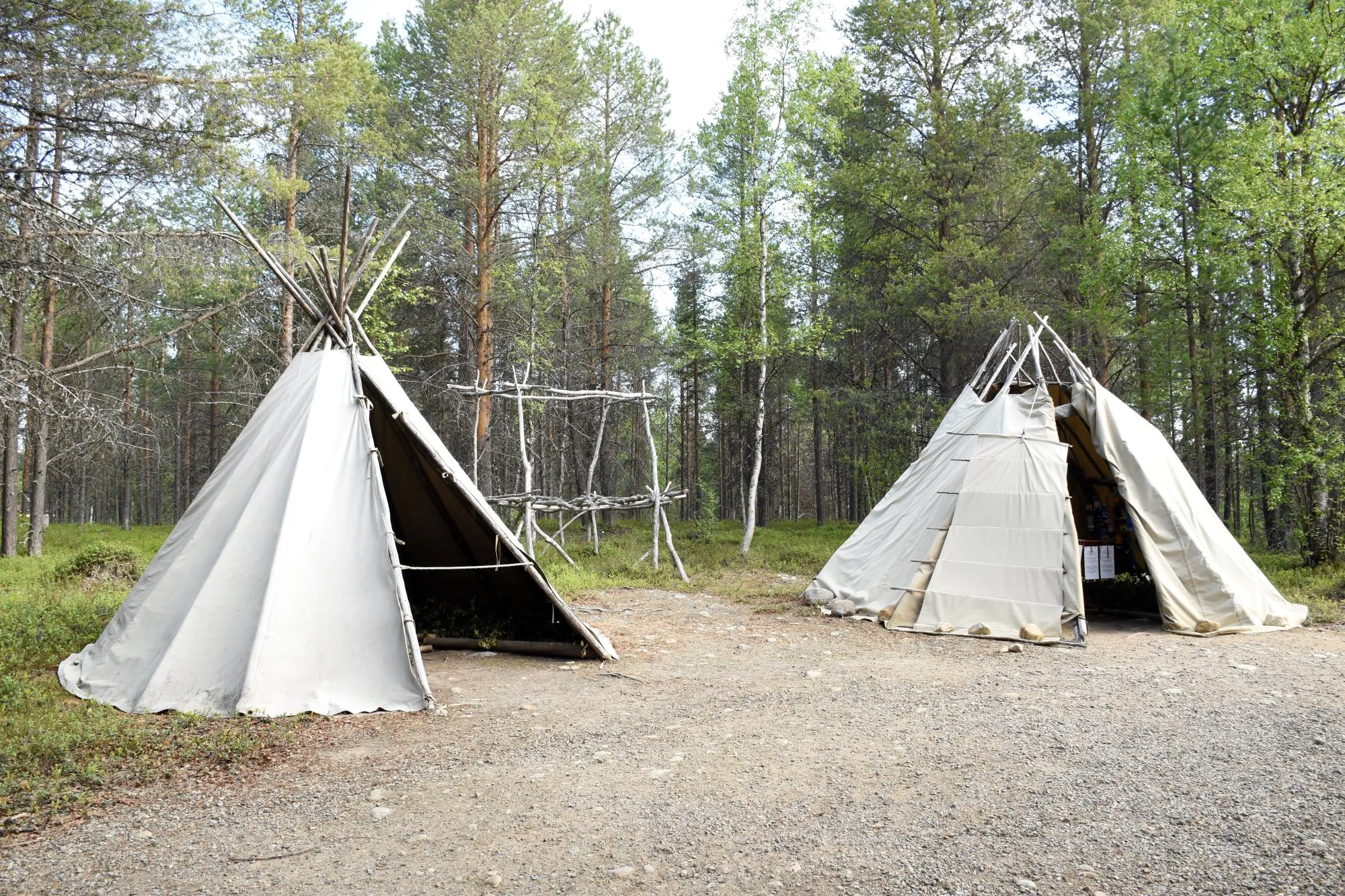
Reindeer herding Sámi dwelling place

Reindeer herding Sámi dwelling place
Traditionally, reindeer were tended throughout the year. The herders migrated from one area to another according to the seasons and pastures. Each herding village, or siida, consisted of several families.
They set out from the summer pastures of the open highlands for the coniferous forest lands in the autumn. There, the reindeer were kept all winter, changing areas every 2–4 weeks according to the grazing and weather conditions.
The herding village started the journey back to the fell region at the beginning of spring. After calving, the reindeer were allowed to roam freely for a couple of weeks around Midsummer.
Korvakota
With the development of full nomadism, the Sámi created from the closed lávvu a unique dwelling known as the korvakota, or loudekota.
The basic framework of the kota consists of curved “ears” (korvakota), against which the roof poles lean. In winter, the kota was covered with woven blankets (raanu), and in summer with linen cloth (hursti), and later with loute fabric. The poles of the kota were carried along from one place to another.
Your feedback is important
Did you enjoy this information?

Theme
