Loading...
Hunting devices

Hunting devices
A way of coping – Trapping
Hunting has traditionally been an important source of livelihood for the Sámi. It guaranteed survival in the harsh Arctic conditions and required knowledge of the environment and animals. Today, hunting is also a hobby and part of the northern way of living. People do not hunt just for fun: the catch is always eaten, making it ethical local food.
Traditionally, the whole animal was used for food and clothing. In past centuries, animal skins were valuable trade items and sometimes used to pay taxes.
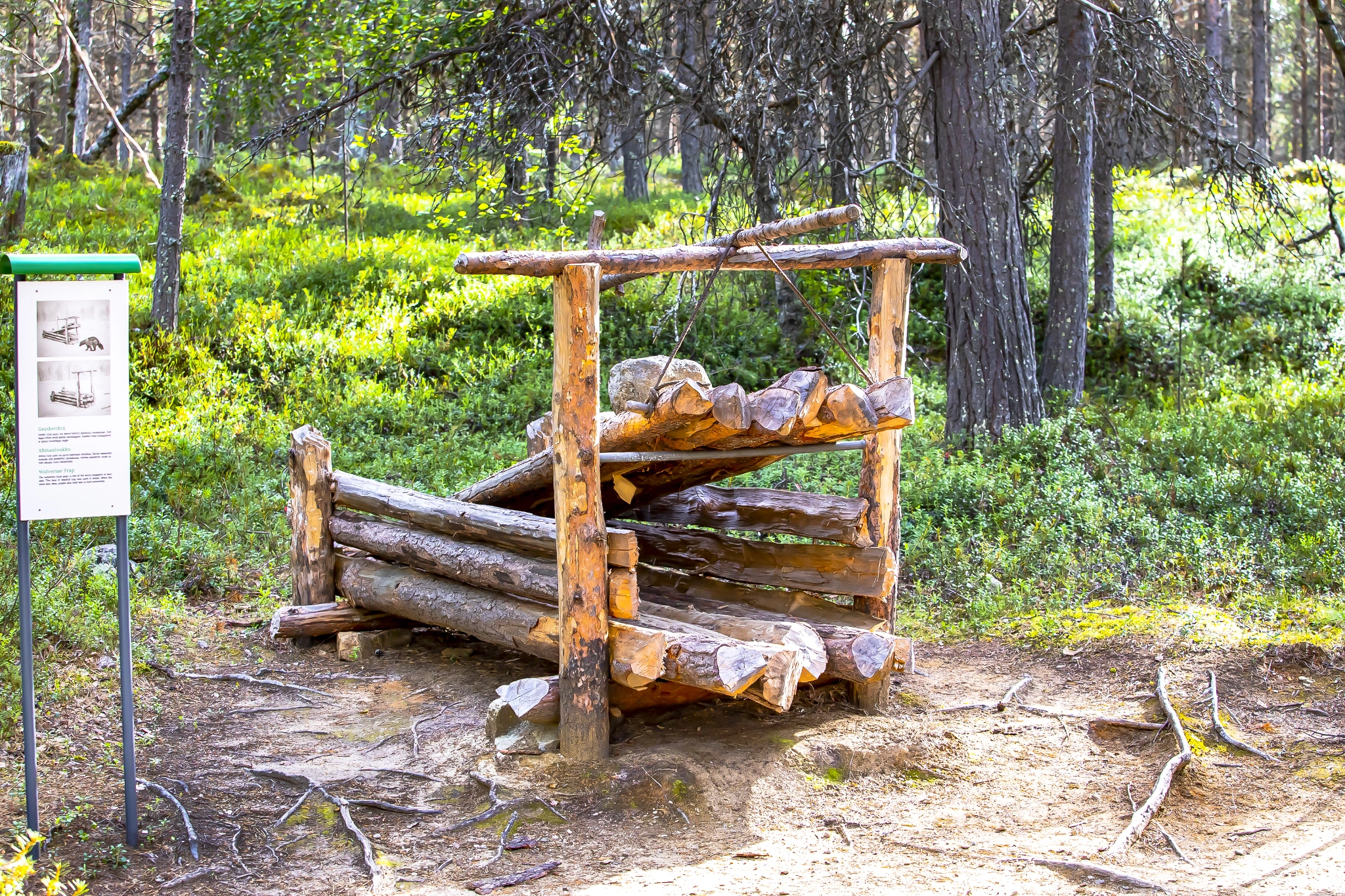
The Hunting Exhibit shows the most important traps used in the Sámi region. A trap is a device to catch game or predators. Traps work in many ways: an animal may trigger it by taking bait or stepping into it, a snare can tighten around the neck, or gravity and bent trees could trigger logs, spikes, or spears. Traps were camouflaged, and hunters tried to minimise human scent.
Wild reindeer were the most important catch. Trapping pits increased catches and were used widely; remains of these pits are still protected as historical relics. Elks, birds, and fur-bearing animals like foxes, bears, and squirrels were also hunted.
The use of traps was largely banned in Finland in 1898. Small predators can still be hunted with cage or steel traps, and traditional hunting methods remain in some areas, such as snaring grouse in Utsjoki, Inari, and Enontekiö.
The Trap Trail at Siida’s Open-Air Museum has been restored using longer-lasting materials. Logs have been barked, ropes tarred, and traps hewn with axes. Metal devices were added to prevent accidental triggering.
Your feedback is important
Did you enjoy this information?

Theme
