Loading...
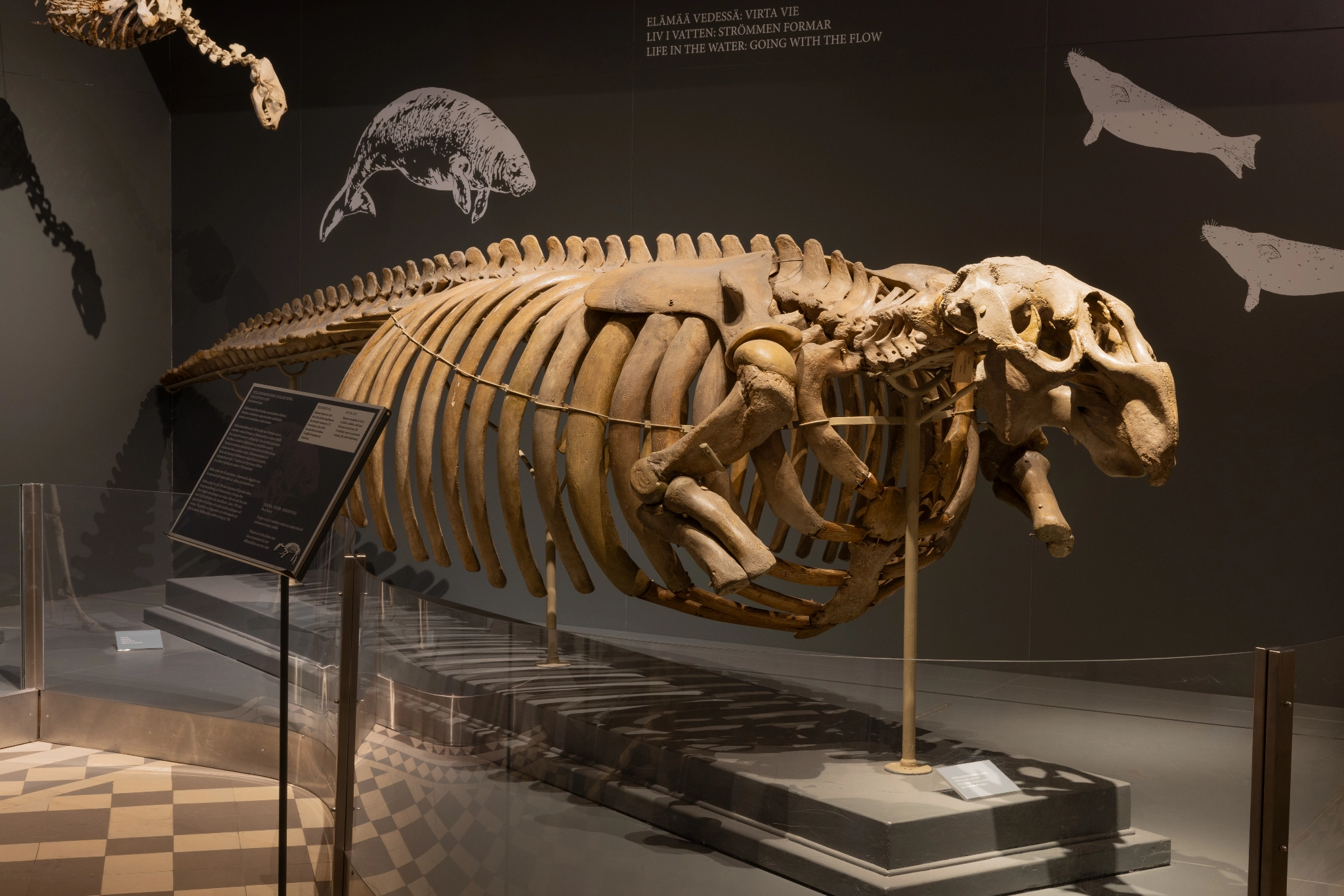
Steller's sea cow (Hydrodamalis gigas)

Steller's sea cow (Hydrodamalis gigas)
This skeleton is one of the rarest and most treasured specimens of our collections. The Steller’s sea cow (Hydrodamalis gigas) lived in the shallow bays of the Bering sea. The species was described in 1741 by Georg Wilhelm Steller, a scientist/naturalist who attended an expedition to the Northeast Passage.
The Steller’s sea cows were large herbivores that moved slowly and were unable to dive. This made them easy targets for sailors and hunters who hurried to the area in hopes of valuable catch, such as sea otter fur and sea cow meat.
Due to excessive hunting, Steller’s sea cow went extinct only 27 years after its discovery.
The concept of extinction was impossible to understand in the 18th century. The disappearance of the sea cow came thus as a surprise. Only a handful of complete skeletons of the species have been preserved. This skeleton is especially valuable, because it is of a single individual found over a hundred years after the species’ extinction.
Your feedback is important
Did you enjoy this information?

Theme
