Loading...
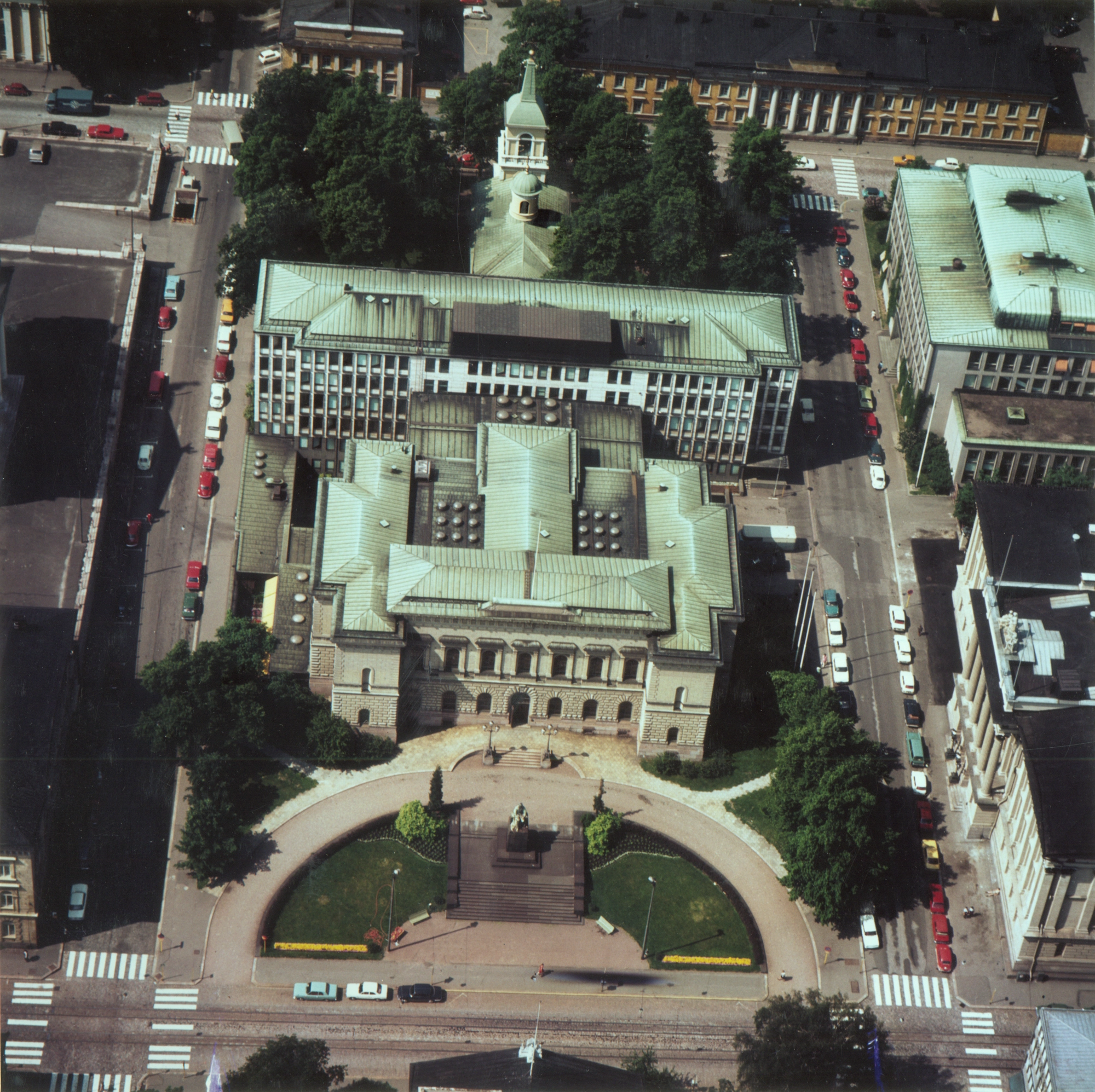
Bank of Finland

Bank of Finland

Detta innehåll är inte tillgängligt på Swedish.
Could Finnish architects ever succeed in winning major commissions? This question troubled the architectural profession in the late 19th century, when early competitions were won by foreign designers. The lack of success among Finnish architects even led some to question the value of the competition process itself.
The competition for the Bank of Finland building in the Kruununhaka district is widely regarded as Finland’s first architectural competition. Concluded in 1876, it was won by the St. Petersburg–based German architect Ludwig Bohnstedt, whose proposal represented a restrained Neo-Renaissance style. However, competitions had already been organized for other projects, such as a fire station, the Hesperia pavilion, a society house interior, and a poorhouse. Surprisingly, even the earlier competition for the New Theatre (now Svenska Teatern) was not considered the first architectural competition.
There is no single clear reason why the Bank of Finland competition became the starting point of Finnish competition history. Likely factors include its prestige and official status: the building was a major public commission, organized by the Finnish state.
The competition also marked a turning point, ending the tradition where the highest-ranking official in the state building administration designed major public buildings. In the 1890s, competitions became more common, and the newly established Arkitektklubben introduced formal competition rules. The club also began to prioritize domestic designers, and foreign participants were not always admitted. Formal architectural education in Finland had begun in the early 1870s at the Polytechnic Institute, yet competitions did not require formal qualifications—students could participate as well. Soon, remarkably young and highly skilled Finnish architects began to emerge.
Your feedback is important
Did you enjoy this information?
Tema
