Loading...
National Theatre

National Theatre

Detta innehåll är inte tillgängligt på Swedish.
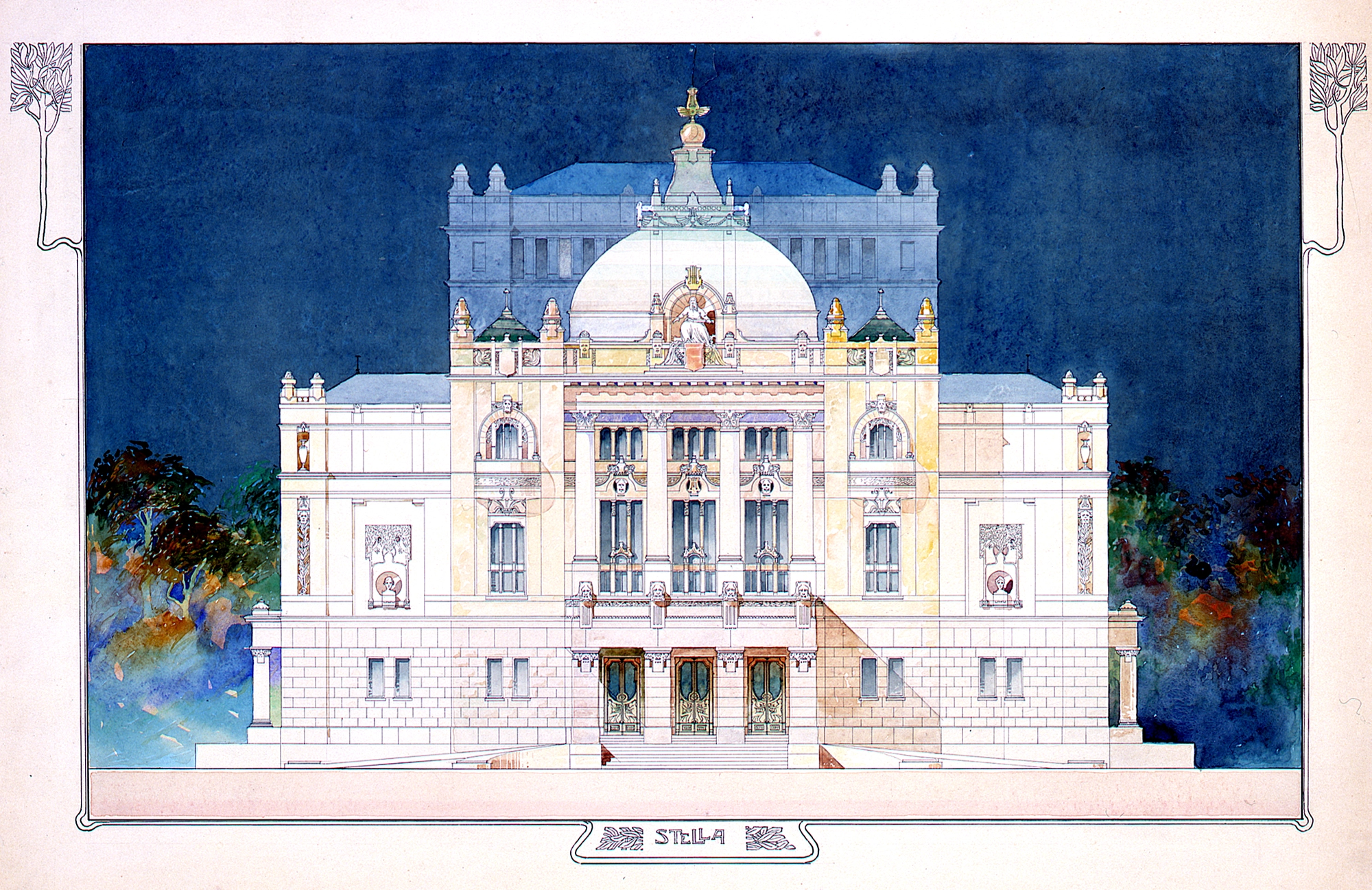
In 1902, the Finnish language rang out in the auditorium of the National Theatre when Aleksis Kivi’s Lea was performed as the inaugural play of the new building. The natural stone façade of the theatre radiated a Finnish national spirit: its granite came from Uusikaupunki and its decorative motifs were carved from soapstone from Juuka. Swans and owls, dandelions and pines carried the audience arriving for the opening into a mythical national landscape.
The National Theatre was one of the first buildings in Helsinki in which the National Romantic style overtook historicist revival styles. The Finnish-minded Onni Törnqvist — later Tarjanne — was quite unexpectedly chosen to implement the building, bypassing the competition winner Jarl Eklund. The choice had weighty political grounds: the period of Russification was sweeping over Finland in 1899, at the very moment of the National Theatre competition.
Although the theatre represents the National Romantic style, Onni Tarjanne was, surprisingly, not a straightforward advocate of National Romanticism. Researcher Timo Koho has argued that Tarjanne’s rationalism and interest in modern Central European theatre buildings are visible in the spatial design: the dimensions of the stage, the form of the spacious auditorium, and the rectangular seating area are examples of this.
In addition to European modernism, the castle-like building also drew inspiration from the United States and the architect Henry Hobson Richardson — as if to create a counterforce to Russification.
The spatial solutions also reflected the structure of society. The idea of the estates was built into the theatre: the first balcony was reserved for the upper estates. The bourgeoisie, meanwhile, was accustomed to box seating.
In the end, the National Theatre became a multifaceted expression of styles and ideologies — one with which both the audience arriving for Lea and Finnish architects were satisfied.
Your feedback is important
Did you enjoy this information?
Tema
