Loading...
Central Railway Station
Central Railway Station
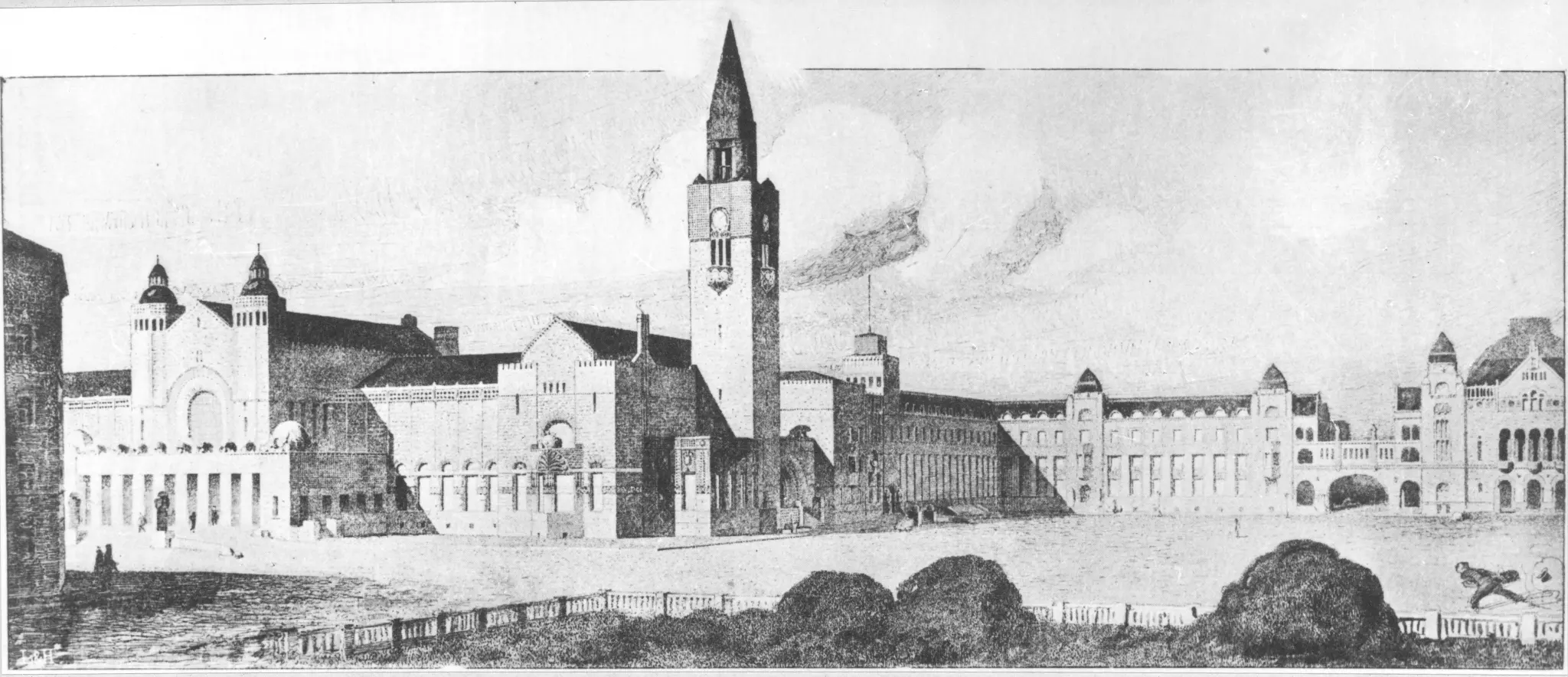
The young architect Eliel Saarinen gained a special opportunity to shape the appearance of what would become the core area of Helsinki when he won the façade drawing competition for Helsinki Central Railway Station in 1904.
At the time, railway buildings were landmarks of progressive ideology, speed, and prosperity. For this reason, their design projects were central. Under pressure from the architectural profession, the Railway Board also organised an open design competition for Helsinki’s main railway station. In the same year, another station building was also the subject of a competition: Saarinen, together with Herman Gesellius, won the competition for Vyborg Railway Station, while Saarinen’s own proposal received second prize. Whereas the main entrance of Helsinki Central Railway Station is decorated with the Lantern Bearers designed by sculptor Emil Wikström, visitors entering the Vyborg station were greeted by four stone bears with arched backs. The castle and church motifs in the proposals for the Vyborg station competition bear a striking resemblance to the National Museum of Finland.
Stone bears were also included in Saarinen’s proposal for Helsinki. Although Helsinki Central Railway Station clearly reflects Saarinen’s vision, the building’s exterior was equally shaped by lively contemporary debate. Sigurd Frosterus, known as the designer of the Stockmann department store, published his famous polemic with Gustaf Strengell: Arkitektur, en stridskrift våra motståndare tillägnad — “Architecture, a polemic dedicated to our opponents”. In their text, Frosterus and Strengell celebrated the triumphant advance of a new style of steel and reason. They set this new direction against the National Romantic stone colossi they so strongly disapproved of. As a result of public debate, Saarinen was forced quite concretely to modify his plans. The National Romantic proposal for Helsinki Central Railway Station ultimately turned toward international rationalism.