Loading...
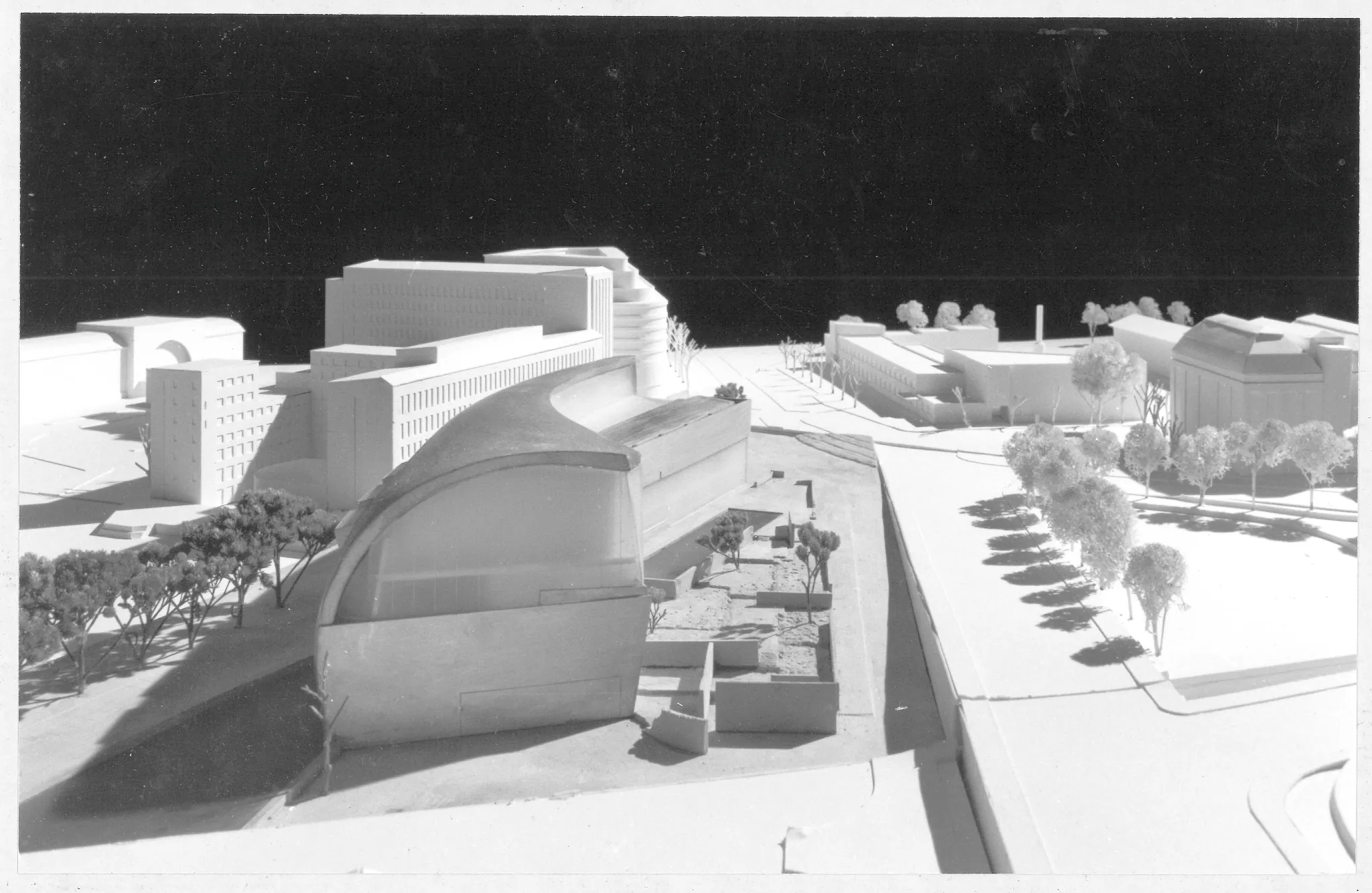
Kiasma Contemporary Art Museum

Kiasma Contemporary Art Museum

Detta innehåll är inte tillgängligt på Swedish.
In 1993, the “competition of competitions” was launched: an open, extended Nordic architectural competition for the Museum of Contemporary Art. The extended format meant that Estonia, Latvia, and Lithuania were also eligible to participate. In addition, four internationally renowned architects were invited. One unusual condition was that none of these four international participants had previously designed an art museum — the competition sought fresh solutions.
A record-breaking 516 proposals were submitted. Among them were numerous fascinating designs. For example, the Japanese architect Kazuo Shinohara’s marble building pierced by a steel tube balanced in shared second place. Kirsi Leiman’s astonishingly expansive urban proposal “Iron and Blood” received an honourable mention.
The competition for the Museum of Contemporary Art involved enormous ideological, stylistic, and urban questions. Yet even heated debates did not ultimately affect the building’s realisation. It was well known that the jury, chaired by architect Kai Wartiainen, was sceptical of reduced, rationalist architecture. Around the time of the competition, many new art museums had also attracted criticism. For this reason, the competition brief emphasised the importance of design proceeding on the terms of art. At the centre should be a space in which the viewer encounters the artwork — everything else would be built around this.
The idea of encountering and looking at art also lies behind the clever pseudonym of Steven Holl’s winning proposal: “Chiasma” refers to the crossing point of the optic nerves. At the same time, the name evokes the French philosopher Maurice Merleau-Ponty’s idea of the intimate interaction between body and space in our relationship with the world.
The unusual pseudonym did not help when new waves of criticism struck against the sculptural forms of Holl’s proposal. Finland was living through a deep recession, and yet a prestigious competition victory had been awarded to a foreign architect. In a spirit of professional self-protection, the Finnish architectural community was uneasy about Kiasma’s plasticity, its metallic character, and its location. After the turmoil within the architectural profession, Steven Holl nearly stumbled over Finns’ feelings about Mannerheim. Holl, arriving from New York, had suggested moving the statue of Mannerheim. For this reason, his friend Juhani Pallasmaa had to act as a cultural interpreter. Pallasmaa located a relative of Mannerheim, who came to admire the scale model of Kiasma at Pallasmaa’s architecture office. This calmed the uproar over the statue, and Pallasmaa sent his friend Holl to learn about Mannerheim — by enjoying schnapps and vorschmack, and by viewing the modern art collected by Mannerheim. The National Board of Public Building had in fact hired Pallasmaa’s office as an intermediary during the implementation phase of Kiasma.
Kiasma was architect Steven Holl’s first major work, and it made him world-famous. Holl was grateful that, despite the heated debates, the final building followed his original plans so closely. Kiasma was renovated in 2020–2022 in close collaboration between architect Simo Freese and Senate Properties, the owner of the building. Kiasma was designated a so-called protected property under responsibility care. Although it did not have official protected status, the principles of the renovation were defined in close cooperation with the Finnish Heritage Agency, with the aim of preserving the distinctive qualities of the original architecture.
Your feedback is important
Did you enjoy this information?
Tema
